FACT CHECKED
Enterprise leaders are under pressure to turn AI investment into measurable operational results. That usually means more than deploying a model. It means improving decision quality, reducing friction in daily work, and making sure employees can act on recommendations inside the systems they already use.
That is why the term augmented intelligence matters. It shifts the conversation from replacing people to helping them perform better in complex workflows where context, oversight, and accountability still matter.

What is augmented intelligence?
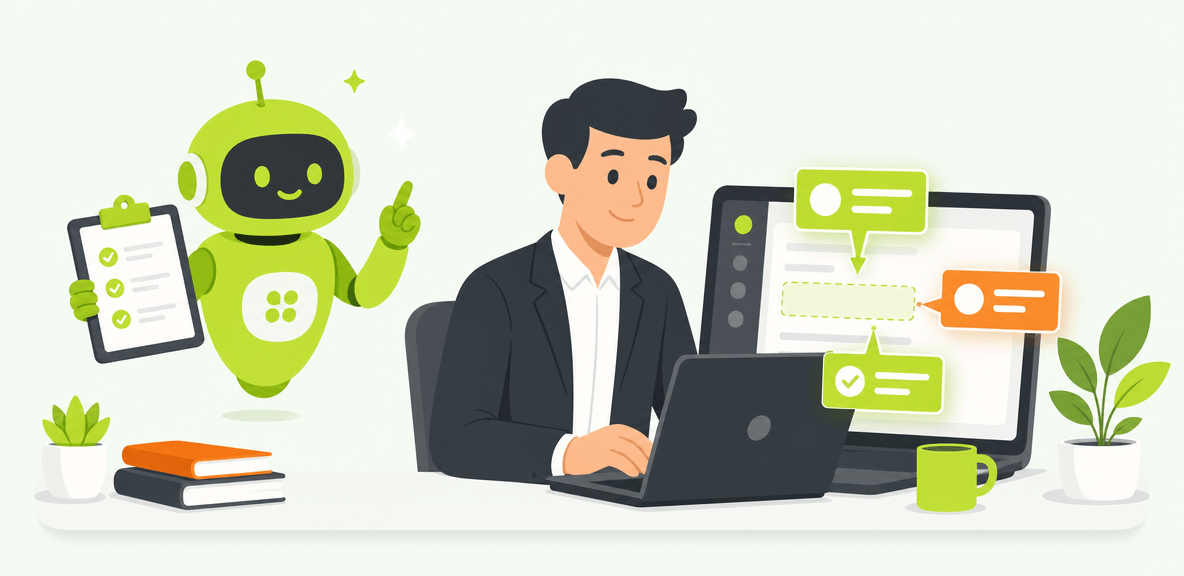
Augmented intelligence is a human-centered approach that uses AI to support, guide, and improve human decision-making rather than replace it.
For enterprise leaders, the term is useful because it frames AI as an operating model, not just a technology category. The question is not simply whether an organization uses AI. The question is where machine-generated insight improves productivity, reduces risk, and helps employees execute work more consistently.
The core principle is straightforward. The strongest outcomes usually come from combining machine speed with human judgment, business context, and accountability. Machines can process large volumes of data and detect patterns quickly. Humans still provide interpretation, exception handling, ethical judgment, and final responsibility for high-impact decisions.
Why enterprises are using the term augmented intelligence instead of just AI
Many organizations use the term augmented intelligence to signal a more practical approach to enterprise AI. It suggests decision support over full autonomy, especially in workflows where errors carry regulatory, financial, or customer consequences.
It also reflects the realities of adoption. Enterprise value does not come from model performance alone. It comes from whether employees trust the output, understand when to use it, and can act on it without leaving their workflow. In that sense, augmented intelligence is often a better fit for organizations focused on governance, measurable outcomes, and controlled change.
A concise augmented intelligence definition for business readers
Augmented intelligence is the use of AI to help people make better decisions and complete work more effectively, while keeping humans in control of the final action.
Augmented intelligence vs artificial intelligence: what is the difference?
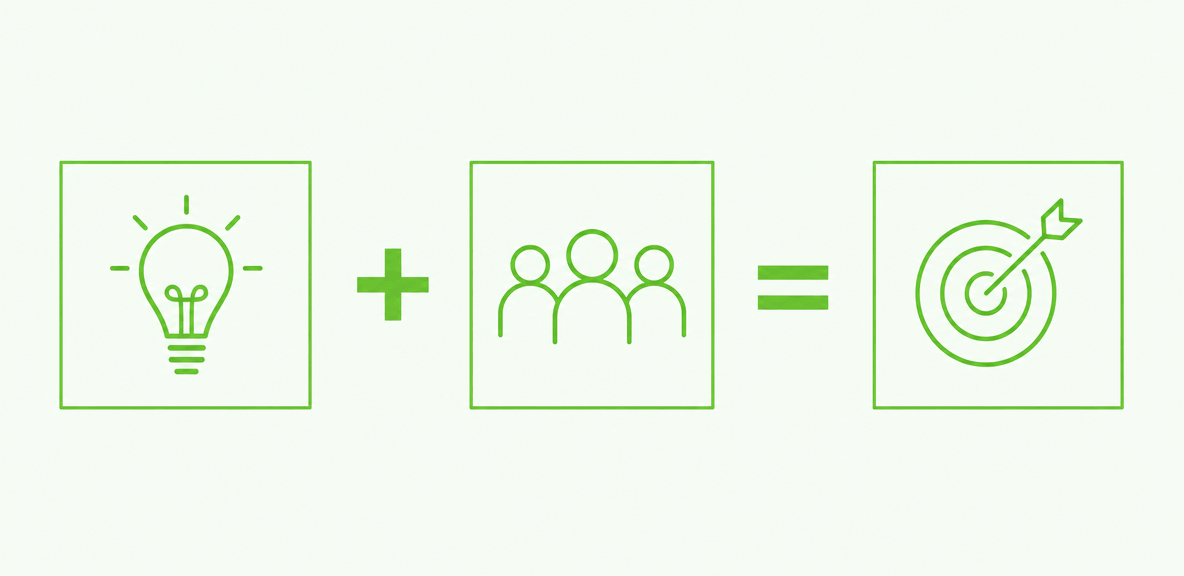
The most useful way to think about augmented intelligence vs artificial intelligence is through goals, control, and accountability.
Artificial intelligence is a broad term. It can describe everything from predictive models and generative tools to autonomous systems that complete tasks with limited human involvement.
Augmented intelligence is narrower. It refers more specifically to AI designed to assist humans in context. The goal is not simply automation. It is better decision-making and execution with human oversight built in.
In practice, enterprises should choose between automation-first and augmentation-first approaches based on workflow risk, complexity, and the need for review.
- Automation-first works best when tasks are repetitive, rules-based, and low risk.
- Augmentation-first works best when tasks involve judgment, exceptions, compliance requirements, or customer impact.
Augmented intelligence vs artificial intelligence examples
A simple comparison makes the distinction clearer.
An AI system might autonomously process routine password reset requests or categorize standard support tickets without review. That is automation-led AI.
An augmented intelligence system might analyze a customer case, recommend the next best action, surface a knowledge article, and prompt an employee with the right response path. The employee reviews and approves the recommendation before acting. That is augmentation-led AI.
Another example appears in finance. AI may automatically match straightforward invoices to purchase orders. Augmented intelligence may flag anomalies, suggest likely causes, and route exceptions to an analyst for approval.
When augmentation is the better enterprise model
Augmentation is often the better model when:
- decisions affect customers, patients, or employees directly
- regulations require traceability or human signoff
- workflows include frequent exceptions
- process quality depends on business context that is hard to encode fully
- organizations are introducing change gradually and need employees to build trust in the system
In these cases, human-in-the-loop design tends to be more effective than pure autonomy.
How augmented intelligence works in real workflows

In real enterprise environments, augmented intelligence usually follows a repeatable pattern:
- Data inputs from business systems, transactions, usage activity, or historical records
- Pattern detection to identify risk, likely outcomes, anomalies, or opportunities
- Recommendations such as next-best actions, prioritization, or workflow suggestions
- Contextual prompts delivered to the employee at the point of work
- Human review for approval, escalation, or exception handling
- Continuous improvement based on outcomes and user feedback
That operating model matters because value depends on more than the model itself. A recommendation has limited impact if it appears in a separate analytics dashboard that employees rarely check. It becomes more useful when it shows up inside the workflow where action happens.
This is especially relevant in enterprises dealing with software complexity, inconsistent process execution, and low feature utilization. Intelligence can identify what should happen next. It still needs a delivery mechanism that helps employees do it correctly.
The role of human-in-the-loop design
Human-in-the-loop design is what makes augmented intelligence workable in enterprise settings.
That includes:
- approval steps before action is finalized
- escalation paths for ambiguous or high-risk cases
- exception handling when recommendations do not fit the scenario
- feedback loops that improve future recommendations
These controls do more than reduce risk. They also improve trust. Employees are more likely to use AI-assisted systems when they understand where judgment still belongs to them and how the system handles edge cases.
Why workflow context matters as much as model quality
Model quality matters, but workflow context often determines whether value is realized.
If employees need to leave their HCM, CRM, ERP, or ITSM platform to find recommendations, adoption drops. Friction increases. The result is familiar in enterprise software: a capable system that underdelivers because it is disconnected from daily work.
Recommendations create more value when delivered at the point of need inside enterprise applications. That is where users can interpret the suggestion, complete the task, and stay in flow. It is also where organizations can reinforce process compliance and reduce execution variance.
Augmented intelligence examples across enterprise functions
Across functions, the pattern is consistent: surface insight, guide action, reduce friction, and keep humans responsible for high-impact decisions.
Augmented intelligence in healthcare
In healthcare, augmented intelligence often supports rather than replaces clinical judgment.
Examples include:
- decision support that highlights possible diagnoses based on patient data
- documentation assistance that helps clinicians complete records more efficiently
- risk flagging for readmission, deterioration, or medication conflicts
- administrative workflow guidance for scheduling, coding, and prior authorization
These use cases can improve speed and consistency, but clinician oversight and regulatory controls remain essential. In healthcare, recommendation quality is only part of the equation. Auditability, safety, and responsible review matter just as much.
Examples in HR, IT, and operations
In HR, augmented intelligence can support onboarding by recommending next steps, surfacing policy guidance, and helping managers complete workflows correctly in HCM systems.
In IT, it can prioritize service requests, suggest likely resolutions, and guide agents through incident or access-management steps inside ITSM platforms.
In operations, it can recommend process paths, flag compliance issues, and help employees navigate complex ERP workflows where mistakes create downstream delays.
These are not abstract AI wins. Enterprise teams can tie them to metrics such as faster onboarding, lower ticket volume, improved task completion rates, and stronger process adherence.
Examples in customer service and finance
In customer service, agent-assist tools can recommend responses, summarize prior interactions, and prompt next-best actions while leaving final communication decisions to the representative.
In finance, augmented intelligence can support fraud review, cash-flow forecasting, invoice exception handling, and reconciliation analysis. Speed matters in these functions, but fully autonomous action may still require review when risk exposure is high.
Benefits, limitations, and how to evaluate ROI realistically
The main benefits of augmented intelligence are practical:
- faster decisions
- lower error rates
- improved employee productivity
- better employee experience
- stronger software ROI when guidance is embedded in workflow
Still, organizations should keep expectations grounded. Augmented intelligence does not fix broken processes, poor data quality, or weak change management on its own. If the workflow is fundamentally flawed, adding recommendations may expose issues faster but will not resolve them.
A useful enterprise evaluation framework should cover:
- governance and approval requirements
- workflow fit and decision risk
- integration effort across core systems
- employee adoption and usability
- operational metrics and baseline measurement
- realistic payback assumptions over time
The difference between a promising pilot and a scalable program usually comes down to workflow fit, sustained usage, and measurable operational impact.
Common limitations and risks to plan for
Common risks include:
- biased or incomplete recommendations
- inaccurate outputs from weak data foundations
- overreliance by employees who stop applying judgment
- low trust if recommendations are opaque or inconsistent
- fragmented data across systems
- added complexity without better execution
These are not reasons to avoid augmented intelligence. They are reasons to design it carefully and measure it honestly.
How enterprises measure augmented intelligence ROI
ROI should be tied to workflow outcomes, not headline AI claims.
Useful metrics include:
- time-to-productivity
- task completion rates
- error reduction
- support ticket deflection
- cycle time
- compliance adherence
- license utilization
Organizations often start with a narrow workflow where the baseline is measurable and the action path is clear. That makes it easier to determine whether recommendations are actually changing behavior and improving results.
Where digital adoption fits into the picture
Even strong AI outputs fail to deliver value if employees do not know how to act on them inside enterprise software.
That is where digital adoption becomes relevant. In-app guidance and workflow support help translate recommendations into execution. Rather than sending employees to separate documentation or training materials, organizations can embed guidance directly into the application experience. For enterprises trying to improve software ROI, that connection matters. Intelligence may identify the right action. Adoption infrastructure helps ensure the action actually happens.
People Also Ask
-
What is augmented intelligence in simple terms?Augmented intelligence is AI designed to help people make better decisions and complete work more effectively, while keeping humans in control of the final action.
-
What is the difference between augmented intelligence and artificial intelligence?Artificial intelligence is a broad category that includes many types of systems, including autonomous ones. Augmented intelligence is a more specific approach that uses AI to support people in context rather than replace them.
-
What are some real augmented intelligence examples in business?Common examples include agent-assist tools in customer service, fraud review support in finance, case prioritization in IT, onboarding guidance in HR, and workflow recommendations inside ERP or CRM systems.
-
How is augmented intelligence used in healthcare?Healthcare organizations use augmented intelligence for diagnostic support, documentation assistance, risk flagging, and administrative workflow guidance. These use cases typically require clinician oversight and strong regulatory controls.
-
Is augmented intelligence better than AI for enterprise workflows?Not always. It is usually a better fit when workflows are high impact, regulated, exception-heavy, or dependent on human judgment. For low-risk repetitive tasks, full automation may be the better model.
-
How do companies measure ROI from augmented intelligence?Companies typically measure ROI using operational metrics such as time-to-productivity, cycle time, error rates, task completion, support ticket reduction, compliance adherence, and software license utilization. The most credible evaluations compare results against a clear workflow baseline over time.