FACT CHECKED
What are AI skills, and why do they matter now?

AI skills are the knowledge and practical abilities employees need to use, evaluate, and improve AI in daily work. For enterprise teams, that means more than knowing what generative AI is. It includes understanding where AI fits in a workflow, how to judge its output, when not to use it, and how to apply it responsibly inside approved systems.
That matters now because AI is no longer limited to data science teams. It is appearing across HR platforms, service desks, CRM systems, productivity suites, knowledge tools, and enterprise search. As organizations adopt these capabilities, the value of the software depends on whether employees can use it well. If they cannot, the result looks familiar: low adoption, inconsistent output, support burden, and poor software ROI.
Not every employee needs the same depth of skill. Most organizations should think in three layers:
- General AI literacy for broad workforce readiness
- Role-specific AI application for business users working inside real workflows
- Advanced technical AI expertise for teams building, integrating, testing, or governing AI systems
This article is a practical AI skills list for leaders deciding what capabilities to build first and where to expect measurable value.
AI skills vs. AI expertise
AI skills and AI expertise are not the same thing. Broadly speaking, organizations do not need every employee to become a machine learning specialist. They need a workforce that understands the basics, can use AI tools with sound judgment, and knows the guardrails. Then they need targeted specialist depth in areas such as data engineering, model operations, security, and integration.
That distinction matters because many AI programs fail by aiming too high or too vaguely. A company-wide awareness session may create interest, but it rarely creates repeatable capability.
Why AI skills are in demand across functions
AI skills are in demand because AI is being embedded into the systems employees already use. HR teams need to evaluate AI-assisted onboarding and policy support. IT teams need to manage governance and rollout. Operations teams need to improve workflow consistency. Finance teams need to review AI-generated summaries and analysis carefully. L&D teams need to help employees learn new behaviors, not just new tools.
In other words, AI skills are increasingly tied to change readiness and software value realization, not just technical innovation.
The core AI skills to learn first
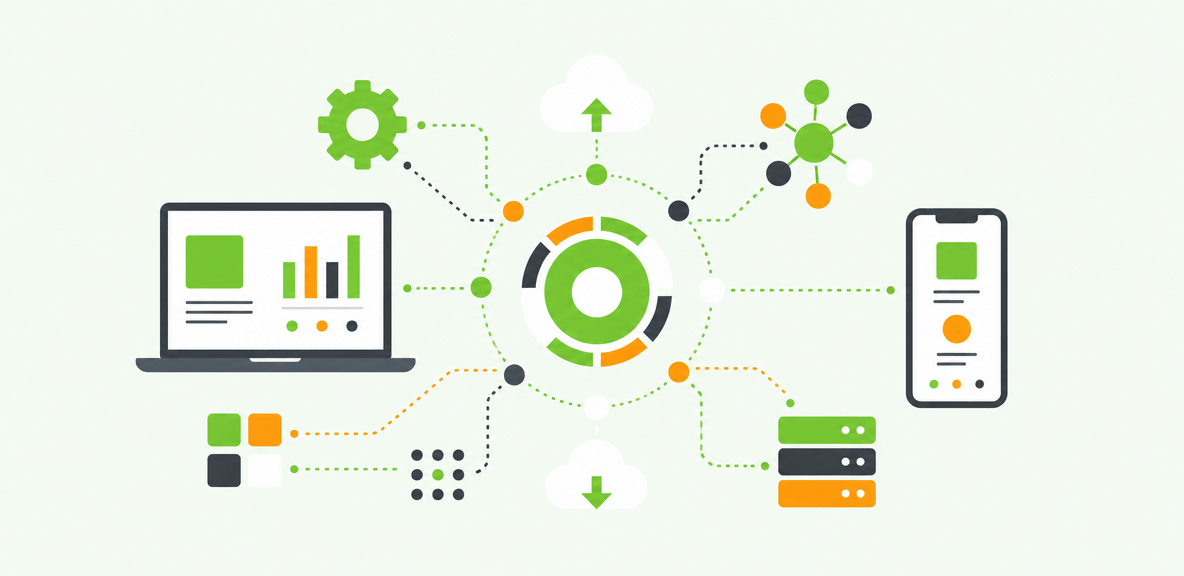
A useful ai skills list should balance business value, accessibility, and enterprise relevance. The strongest starting point usually combines human judgment with practical tool use.
1. AI literacy and foundational concepts
Start with core concepts. Employees should understand terms such as generative AI, machine learning, large language models, automation, hallucinations, and model limitations. They do not need deep theory, but they do need enough knowledge to use AI without overtrusting it.
For non-technical professionals, this is often the most important first step. For technical teams, it is the baseline for more advanced work.
2. Prompting and task framing
Prompting matters because AI systems respond better to clear instructions, relevant context, explicit constraints, and examples. Employees who can frame a task well tend to get more useful output.
Still, prompt skill alone is not a complete AI strategy. Better prompts improve interaction quality, but they do not replace process design, governance, or review.
3. Critical thinking and output evaluation
This is one of the most important AI skills in enterprise settings. Employees need to verify accuracy, identify bias, check sources where relevant, and decide whether an output is good enough to use, revise, or reject.
In practice, this skill often determines whether AI improves quality or simply increases the speed of avoidable mistakes.
4. Data literacy and workflow judgment
AI output is only as useful as the inputs, permissions, and workflow context behind it. Employees should understand basic data quality issues, privacy boundaries, and where process context affects results.
This is especially important in enterprise environments, where the same AI tool may be appropriate for one task and risky for another.
5. AI ethics, governance, and risk awareness
Responsible use is now a core workforce capability. Teams need awareness of privacy, compliance, intellectual property concerns, security guardrails, and approved-use policies.
Without this layer, adoption may increase faster than control. That creates operational risk rather than business value.
6. AI tool proficiency and integration into work
Organizations get more value when employees use AI inside existing workflows rather than as isolated experiments. That includes copilots, enterprise search, workflow assistants, and AI features embedded in business software.
The key question is not whether employees can try AI. It is whether they can use it consistently inside the systems that drive the work.
7. Collaboration, communication, and change adoption
AI use rarely scales through individual experimentation alone. Teams need to share successful prompts, document effective patterns, compare outcomes, and support peers through change.
This is where enablement becomes operational. A few skilled enthusiasts may generate isolated wins. Scaled impact requires shared practices.
Which AI skills are most in demand by role and business use case?
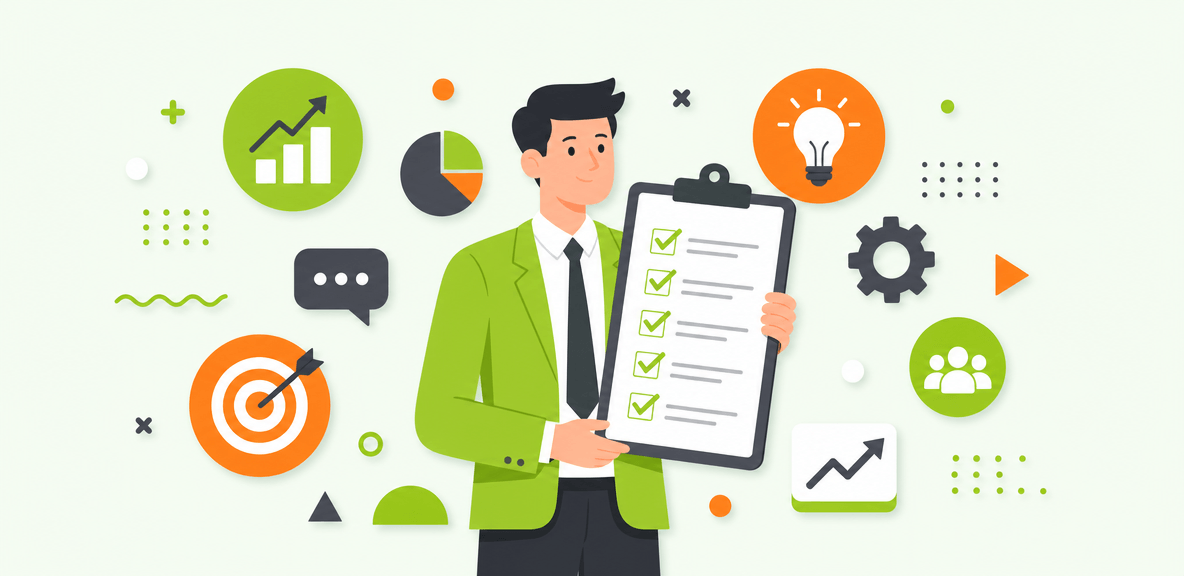
The phrase “ai skills in demand” only becomes useful when tied to roles and workflows. Demand varies based on process complexity, data sensitivity, and how standardized the task is.
For business users and managers
Business users typically need:
- AI literacy
- Prompting and task framing
- Output review and judgment
- Decision support awareness
- Meeting and document summarization skills
- Responsible-use judgment
These employees are often using AI to save time, improve communication, and speed up routine knowledge work. The skill priority is less about building models and more about using AI without reducing quality.
For HR, L&D, and employee enablement teams
These teams increasingly need AI skills for:
- AI-assisted onboarding
- Knowledge delivery
- Skills mapping
- Policy guidance
- Change management support
Their focus is both operational and behavioral. They need to understand how AI can improve employee support while ensuring consistency, clarity, and appropriate governance.
For IT and digital transformation teams
IT and transformation leaders need skills related to:
- Governance and approved-use policies
- Tool evaluation
- Integration oversight
- Automation opportunity assessment
- User support
- Adoption analytics
These teams often determine whether AI becomes a controlled enterprise capability or a fragmented set of experiments.
For technical and data teams
Technical teams need deeper capability in:
- Programming
- Model selection
- Data engineering
- API use
- MLOps basics
- Testing
- Secure deployment
This is where AI expertise becomes more specialized. Not every organization needs large internal AI engineering teams, but those building or integrating custom AI solutions do need this depth.
How to build AI skills across the organization
The most effective AI skilling programs start with business outcomes, not with a tool purchase or a generic training catalog. Leaders should connect skill-building to measurable improvements in time-to-productivity, quality, adoption, and support load.
Start with business workflows, not generic training
Begin by identifying high-friction tasks. Look for workflows where employees lose time, make repeatable errors, rely on manual workarounds, or struggle to use software features correctly.
Then map which AI skills would improve speed, consistency, or accuracy in those workflows. This keeps skilling tied to real business value rather than abstract awareness.
Create role-based learning paths
Different roles need different depth levels. A frontline employee may need basic prompting and policy awareness. A people manager may need decision-support judgment. An IT admin may need governance and rollout capability. An analyst may need deeper data and automation skills.
Role-based learning paths are usually more effective than one-size-fits-all programs because they make the learning immediately relevant.
Use practice in the flow of work
One-time courses are rarely enough. Employees retain more when they can practice in the systems and workflows where the work actually happens.
This is where contextual support matters. In-workflow guidance, embedded reminders, and role-specific reinforcement help employees apply skills at the point of need. For organizations deploying new AI-enabled features across enterprise software, this approach can reduce the gap between training completion and real adoption. WalkMe supports this model by delivering in-app guidance, contextual help, and analytics inside enterprise workflows, which can help teams reinforce new behaviors as tools change.
Measure outcomes, not just course completion
Completion rates are easy to report, but they do not prove capability. More useful measures include:
- Tool adoption rates
- Task completion time
- Error reduction
- Support ticket volume
- Employee confidence
- Workflow completion quality
If the goal is business value, the measurement model should reflect actual workflow outcomes.
Set realistic expectations: what AI skills can and cannot solve
AI skills improve readiness and execution. They do not fix broken processes, poor data quality, unclear ownership, or weak governance. That is an important distinction for enterprise leaders.
A well-trained workforce can still struggle if the underlying process is inconsistent or if the approved tools are unclear. Likewise, strong AI tooling will underperform if employees do not know when to trust it, when to check it, and how to use it inside real work.
Common mistakes organizations make
Several patterns show up repeatedly:
- Overinvesting in broad awareness sessions
- Underinvesting in workflow-specific practice
- Ignoring governance and privacy boundaries
- Failing to support long-tail adoption after the launch period
Another common mistake is assuming prompt engineering alone creates enterprise value. In reality, value usually comes from combining skill, policy, workflow design, and reinforcement.
When AI skilling delivers the strongest ROI
Returns are typically strongest when AI skills are tied to repeatable, high-volume workflows. Examples include service desk tasks, employee support processes, document-heavy approvals, onboarding, and routine analysis.
The conditions matter. AI skilling tends to deliver stronger ROI when employees have clear policies, approved tools, and guidance in the flow of work. That is what turns isolated experimentation into operational capability.
People Also Ask
-
What are the most important AI skills to learn first?For most enterprise teams, the most important AI skills to learn first are AI literacy, prompting and task framing, critical evaluation of outputs, data literacy, and responsible-use awareness. These skills create a practical base for using AI safely and productively in daily work.
-
Which AI skills are in demand for non-technical jobs?In non-technical roles, the AI skills most in demand are general AI literacy, prompting, summarization and content review, decision-support judgment, and responsible-use awareness. Employers increasingly value people who can use AI to improve speed and consistency without lowering quality or creating compliance risk.
-
Do I need coding to build useful AI skills at work?No. Many useful AI skills do not require coding. Business users can create significant value through AI literacy, prompting, workflow judgment, and output evaluation. Coding becomes more important for technical roles such as data engineering, integration, model deployment, and advanced automation.