FACT CHECKED
What is AI operations and why does it matter now?

AI operations refers to the use of AI and machine learning to improve how enterprise IT operations teams detect, prioritize, investigate, and resolve technology issues. In practice, it sits close to AIOps, observability, automation, and service management. The goal is not simply to collect more monitoring data. It is to turn that data into operational decisions and faster action.
That distinction matters. Most enterprise environments already generate more telemetry than teams can realistically interpret manually. Logs, metrics, traces, alerts, tickets, configuration changes, and dependency maps all produce signals. But without correlation and prioritization, more data often creates more noise.

AI operations addresses a familiar enterprise problem set:
- too many alerts and not enough context
- rising infrastructure and application complexity
- pressure to reduce mean time to resolution without adding headcount
- fragmented tools across cloud, SaaS, on-premises, and service desk environments
- growing dependence on always-on employee and customer experiences
Interest has increased because the operating environment has changed. Hybrid cloud architectures, distributed applications, SaaS sprawl, and global digital workflows have made traditional monitoring harder to manage. A slowdown in a business-critical workflow is no longer just an IT event. It can disrupt onboarding in HR, approvals in finance, support processes in operations, or customer-facing service delivery.
AI operations is best understood as an operational decision-support and automation layer. Monitoring tells you something happened. AI operations helps determine what matters, why it is happening, and what should happen next.
AI operations vs traditional IT operations
Traditional IT operations often relies on reactive, ticket-driven workflows. Teams wait for thresholds to trigger alerts, sort through duplicate notifications, escalate issues manually, and investigate root cause across disconnected tools. This can work in smaller environments. It breaks down when signal volume outpaces human capacity.
AI operations changes that workflow by adding:
- pattern detection across large telemetry sets
- event correlation to reduce duplicate alerts
- prioritization based on probable business impact
- root cause analysis support
- automated or semi-automated response paths
The outcome is not fewer operational responsibilities. It is a more focused queue and a faster path from detection to remediation.
AI operations vs AIOps, MLOps, DevOps, and SRE
These terms overlap, which is why buyers often use them interchangeably.
AI operations vs AIOps: In most enterprise contexts, AI operations and AIOps are used similarly. AIOps is the more established category term for applying AI to IT operations data and workflows. AI operations is often used more broadly to describe the operating model and toolset around that approach.
AI operations vs MLOps: MLOps focuses on building, deploying, monitoring, and governing machine learning models. AI operations focuses on using AI to improve IT operations performance.
AI operations vs DevOps: DevOps is a cultural and operational model that connects software development and IT operations. AI operations can support DevOps by improving incident response, release visibility, and change impact detection.
AI operations vs SRE: Site reliability engineering applies engineering discipline to system reliability, often through service level objectives and automation. AI operations can support SRE teams with anomaly detection, correlation, and incident prioritization.
How AI operations works in practice

At a practical level, AI operations follows a repeatable workflow.
First, the platform ingests data from across the environment. Then it normalizes signals so events from different systems can be analyzed together. Next, it detects anomalies, correlates related events, identifies probable root causes, recommends or triggers actions, and learns from outcomes over time.
The data foundation usually includes:
- logs
- metrics
- traces
- incident and ticket history
- CMDB and asset data
- topology and dependency maps
- change records
- business service context
This is where many deployments succeed or fail. AI operations is only as effective as the data and workflows around it. If source data is incomplete, if integrations are shallow, or if service ownership is unclear, the model will struggle to produce trusted recommendations.
When the foundation is sound, AI ops tools help teams move from alert overload to prioritized incidents. Instead of asking engineers to interpret hundreds of notifications, the system groups related events, highlights likely causes, and routes incidents through predefined workflows. That shortens triage time and reduces repetitive manual work.
The core capabilities enterprise buyers should expect from AI ops tools
Enterprise buyers should expect a capable platform to support several functions:
- Anomaly detection to identify behavior that falls outside normal patterns
- Event correlation to group related alerts into a smaller number of actionable incidents
- Root cause analysis to surface likely causes and affected dependencies
- Service health visibility across applications, infrastructure, and business services
- Incident prioritization based on severity, impact, and service criticality
- Predictive insights that highlight risk before failure becomes visible to users
- Workflow automation for routing, ticket enrichment, remediation, or escalation
The value is cumulative. A platform that detects anomalies but cannot integrate with service workflows will create less operational impact than one that connects detection to action.
Where AI operations fits in the enterprise stack
AI operations does not replace the rest of the enterprise stack. It works alongside it.
It typically sits between or across:
- observability platforms that collect telemetry
- ITSM platforms that manage incidents, changes, and service requests
- cloud management tools that track infrastructure state and cost
- security operations tools where some signals may overlap
- digital adoption workflows that help responders act consistently inside enterprise systems
That last point is often missed. Even when an AI operations platform generates good recommendations, value depends on whether teams follow the right workflow in the systems they use every day. In complex environments, consistent execution matters as much as accurate detection.
Top AI operations use cases and where ROI shows up first
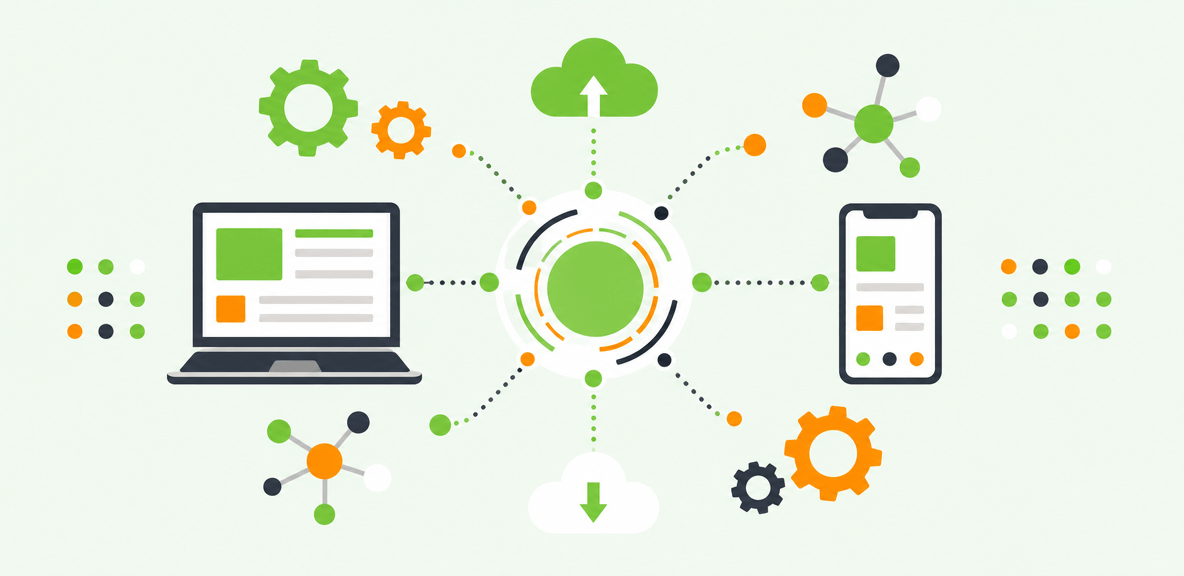
The first funded use cases are usually the most operationally visible: incident management, performance monitoring, cloud operations, service desk efficiency, and change impact detection.
In incident management, AI operations reduces alert noise, speeds triage, and helps identify probable root cause. The immediate ROI shows up in lower MTTR and fewer escalations.
In performance monitoring, teams can spot degradation earlier and prioritize issues based on business service impact rather than raw alert count. That supports uptime and reduces workflow disruption.
In cloud operations, AI operations helps teams manage dynamic infrastructure, transient failures, and dependency complexity. The value is strongest where environments change frequently and manual correlation is slow.
In service desk efficiency, enriched tickets, better routing, and smarter prioritization reduce repetitive effort. Organizations often focus here when ticket volumes are high and front-line teams spend too much time on triage.
In change impact detection, the platform connects incidents to recent releases, configuration changes, or dependency shifts. That can reduce change failure rates and improve release confidence.
These technical gains also affect employee experience. Faster issue resolution means fewer stalled approvals, fewer login or workflow disruptions, and less downtime across HR, finance, IT, and operations teams. When internal systems recover faster, productivity loss is contained earlier.
High-value use cases by operational maturity
A phased path usually works best.
Early stage: alert correlation, incident deduplication, and service health visibility
Intermediate stage: triage support, root cause analysis, and change impact detection
Advanced stage: predictive operations, automated remediation for low-risk scenarios, and closed-loop learning
This progression matters because trust is built in stages. Most enterprises should not begin with broad autonomous remediation. They should begin by improving signal quality and incident prioritization.
How to measure AI operations success
Practical KPIs include:
- MTTR
- MTTD
- incident volume
- false positive rate
- engineer time saved
- service desk deflection
- escalation volume
- change failure rate
- business service availability
The strongest ROI cases usually appear where incident volume is high, environments are complex, and repetitive triage work is common. That is where even modest improvements in prioritization and remediation speed compound quickly.
How to evaluate AI operations platforms and plan adoption
A useful evaluation framework should cover more than model claims.
Buyers should assess:
- integration depth across observability, ITSM, cloud, and change systems
- model transparency and explainability
- automation controls and approval paths
- governance and auditability
- scalability across teams and services
- fit with existing workflows and operating practices
Implementation realities matter just as much as platform capability. A successful pilot needs a defined scope, clean data sources, named stakeholders, runbook design, and clear ownership between operations, platform engineering, and service management teams.
Trust is a recurring issue in enterprise evaluations. Teams need to understand why the platform made a recommendation, what data informed it, and when a human should remain in the loop. Explainability and auditability are not secondary concerns. They are adoption requirements.
Operational value also depends on what happens after rollout. If responders do not use recommendations consistently, or if new workflows remain separate from the systems where work actually happens, value erodes. This is where adoption support becomes important. Embedded guidance inside tools such as ITSM or enterprise workflow systems can help teams execute new response paths more consistently, especially during change.
Questions to ask vendors during an AI operations evaluation
Buyers should ask vendors:
- What proof of value can you demonstrate in environments similar to ours?
- Which telemetry, observability, and ITSM tools do you integrate with natively?
- How much tuning is required during the first 90 days?
- What deployment models do you support?
- How do you handle security, access control, and audit requirements?
- How are recommendations explained to responders?
- Which workflows can be automated safely, and where should approval gates remain?
- What reporting do you provide for operational leaders and executive stakeholders?
Why adoption often decides whether the platform delivers value
Even strong platforms underperform when teams ignore recommendations, bypass new workflows, or revert to manual habits. That usually happens for one of three reasons: responders do not trust the output, the process adds friction, or the guidance is not embedded where work happens.
This is an adoption problem, not just a tooling problem. If teams need to change how they triage incidents, update tickets, execute runbooks, or trigger remediation, they need support inside those workflows. For enterprises managing change across large operations teams, digital adoption practices can help reinforce new behaviors and reduce time-to-value after deployment.
Limitations, risks, and realistic expectations for AI operations
AI operations is not a substitute for sound monitoring, clear service ownership, process discipline, or skilled engineers. It improves operational decision-making. It does not remove the need for operational maturity.
Common failure modes include:
- poor source data
- fragmented tooling
- black-box recommendations
- over-automation without controls
- weak executive sponsorship
- unclear incident workflows
AI operations works best in environments with enough signal volume and operational consistency to support pattern detection and workflow automation. It struggles in low-data environments, unstable processes, or organizations where incident handling is largely ad hoc.
Adjacent search topics such as AI operations jobs, AI operations course options, and AI operations certification are relevant as team readiness considerations. They can help organizations build internal capability and confidence. But they are not primary buying criteria. The more important question is whether the team has the operational foundation to use the platform effectively.
When AI operations is a strong fit and when it is not
AI operations is a strong fit when:
- environment complexity is high
- incident volume is significant
- alert fatigue is a real issue
- service dependencies are hard to trace manually
- the organization has a defined incident process
- leadership is open to selective automation
It is a weaker fit when:
- telemetry coverage is poor
- incident volume is low
- workflows are inconsistent
- service ownership is unclear
- the organization expects instant autonomous operations without governance
What a realistic first 12 months looks like
In most enterprises, the first 12 months should be phased.
Months 1-3: establish integrations, baseline data quality, and improve service visibility
Months 4-6: reduce noise, improve prioritization, and shorten triage time
Months 7-9: operationalize root cause support, change correlation, and workflow consistency
Months 10-12: expand selective automation where trust, controls, and governance are already in place
That is a realistic path. Better visibility comes first. Faster triage follows. Broader automation usually comes later, once teams trust the outputs and governance is established.
People Also Ask
-
What is AI operations?AI operations is the use of AI and machine learning to improve IT operations tasks such as anomaly detection, event correlation, incident prioritization, root cause analysis, and remediation workflow automation. It helps enterprise teams turn high-volume telemetry into faster, more consistent operational decisions.
-
What is the difference between AI operations and AIOps?In most enterprise discussions, the terms are very close. AIOps is the more common category label for applying AI to IT operations data and workflows. AI operations is often used more broadly to describe the operating model, tools, and practices involved in using AI within IT operations.
-
How do AI ops tools improve ROI in enterprise IT?AI ops tools improve ROI by reducing manual triage effort, lowering MTTR, cutting false positives, improving service availability, and helping service desk and operations teams work more efficiently. The strongest returns typically appear in complex environments with high incident volume, high alert noise, and repetitive response work.