FACT CHECKED
Software pricing is a complex domain, and without clear visibility into how fees are determined, the technology buying process can quickly become error-prone.
A solid understanding of how software providers structure their pricing offers is essential context for informed budgeting and strategic planning.

Current research indicates that year-on-year price inflation for software products stands at 8.7%, effectively amounting to a 9% increase. Against this backdrop, understanding the mechanics of software pricing has shifted from a useful practice to an operational necessity.
When rising prices intersect with growing pressure to demonstrate value through digital adoption initiatives, the imperative becomes even clearer: organizations must look deeper into how pricing decisions are made and what those decisions imply for long-term spend.
This article examines the most common software pricing strategies, how they function in real-world scenarios, and the key considerations to evaluate before making a purchasing commitment.
What is software pricing?
Software pricing is a framework that determines how much an organization pays to adopt, use, and expand software over a given period.
Rather than a single upfront figure, it includes a blend of licences, usage constraints, feature entitlements, support commitments, along with renewal mechanics that shift as needs expand.
Understanding pricing helps demarcate long-term value. It reveals how spending grows, where unforeseen costs emerge, and whether software can sustain enterprise demands without undermining budgets.
As software adoption accelerates, a disciplined understanding of pricing is vital for CIOs seeking predictable software ROI.
What different software pricing models exist?
Software pricing models outline how a vendor structures access and how charges adjust as usage changes.
Recognizing these structures helps forecast spend patterns and evaluate which model aligns with scale and governance needs. Clear visibility also shows how each model responds to expansion, feature upgrades, multi-team rollouts, and maintenance demands.
Below are the core software pricing models and how they shape cost and value:
| Pricing model | What you pay for | Pros | Cons |
| Feature-based | Specific features you turn on | Only pay for what you use | Add-ons can stack up quickly |
| Freemium | Free entry, paid upgrades | An easy way to try the product | Real costs appear once you rely on premium features |
| Flat-rate | One fixed price for full access | Simple, predictable budgets | Paying for capacity you don’t need |
| Tiered | Bundled packages with set limits | Aligns spend with team size and maturity | Sudden jumps when you outgrow a tier |
| Usage-based | Consumption, such as data or API calls | Scales fairly with demand | Budget swings if usage spikes |
Feature-based
Feature-based pricing charges for specific capabilities, meaning you only pay for what you actually use. It helps avoid overbuying, but it’s important to watch for add-ons and premium modules that seem minor at first yet compound quickly as adoption grows across enterprise environments.
Freemium
Freemium models offer a no-cost entry point, with stronger features or higher capacity usually locked behind paid plans. This lowers the barrier to adoption but can hide future spend, especially once teams rely on premium functions. You need to understand upgrade triggers and long-term cost patterns before committing entirely.
Flat-rate
Flat-rate pricing provides one fixed cost for full product access. It’s simple, predictable, and easy to budget for, which is why many prefer it over tiered pricing, for example. However, it can create inefficiencies if you’re paying for more capacity or capability than it realistically uses as needs genuinely evolve.
Tiered
Tiered pricing bundles features, usage limits, and support levels into set packages. It helps align spend with maturity, but each tier has thresholds that can accelerate costs once crossed. Planning and modelling different growth scenarios are key to avoiding sudden jumps in spend. This means making a concerted effort to bridge any gaps between your current needs and the tier you’re likely to grow into.
Usage-based
Usage-based pricing ties cost directly to consumption, and includes API calls, transactions, data volume, or similar metrics. It scales naturally with demand, which is why it’s popular, but it introduces budget volatility. Understanding how new workflows, enterprise automation, or usage spikes might push spend beyond initial expectations is essential.
What features should buyers look for in software pricing?
When assessing software pricing, look for elements that make costs easy to understand and show how spending is likely to shift as needs grow. The following features are a clear baseline for judging whether a pricing model is fair, transparent, and aligned with long-term needs:
| Feature | Coverage | Checklist |
| Dynamic pricing | How charges adjust based on usage patterns and activity levels. | Verify that cost changes follow predictable rules, not sudden or unexplained spikes. |
| Integration | How the software connects to existing systems and workflows. | Confirm which integrations are included, which require add-ons, and whether limits could trigger extra fees. |
| Scalability | How pricing responds as usage, users, or data volume grows. | Identify thresholds or volume bands where costs increase sharply to avoid surprises. |
| Customizability | How flexibly the software can be tailored to workflows or processes. | Check which adjustments are included and which require paid services or professional support. |
| Security | Which protections come standard, and how they are applied. | Ensure critical safeguards like encryption, access control, and monitoring are included, not restricted to premium tiers. |
Dynamic pricing
Dynamic pricing adjusts software costs in real time based on usage, demand, or resource intensity. It keeps entry costs low but can push monthly spending higher during periods of heavy activity. It’s imperative to track patterns closely so fluctuations don’t disrupt budgeting or planning.
Integration
Integration covers how well a platform connects with existing tools and the extra work required to link them. Pricing can rise when add-on connectors, API limits, or third-party apps are involved, so understanding these dependencies helps prevent hidden charges and keeps the total cost of ownership (TCO) predictable.
Scalability
Scalability reflects how pricing responds to increasing usage, typically for teams, data, or workflows. Clear thresholds and volumes matter because they show when costs jump, flatten, or taper off. Understanding these breakpoints helps plan spending and avoid unexpected charges as operational demands rise.
Customizability
Customizability shows how far software can be shaped to fit real-life workflows without triggering extra service charges. Transparent pricing should spell out what’s included, what incurs a fee, and where the limits lie. Clear boundaries prevent hidden costs and make forecasting easier as software is refined.
Security
Security influences software pricing because protection can be included in the base package or offered as a premium tier. Understanding which safeguards come as standard prevents paying extra for essentials. A clear security scope also shows where additional costs may appear as data privacy and security parameters increase or compliance expectations become stricter.
9 Proven strategies for optimizing software pricing outcomes
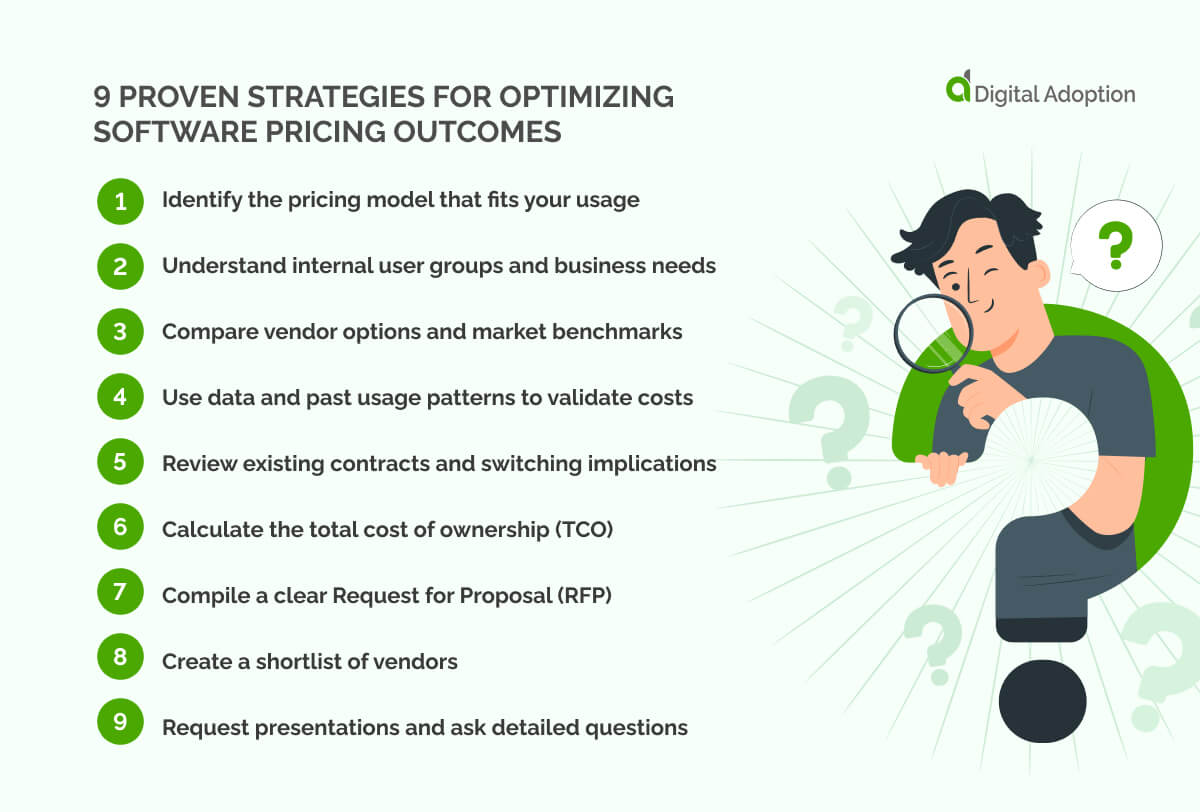
Once you understand the features that shape software pricing, the next step is exploring the strategies that consistently lead to stronger outcomes. The following reveals how to secure fair terms, reduce complexity, and build pricing arrangements that hold up as the environment evolves:
1. Identify the pricing model that fits your usage
Assess how costs scale with actual activity, including feature use, seasonal peaks, and workflow intensity. Choose the model that aligns naturally with demand to avoid surprises and pay only for value.
2. Understand internal user groups and business needs
Map which teams use which features and where value is created. Align pricing with real usage patterns to improve predictability and avoid paying for unused functionality.
3. Compare vendor options and market benchmarks
Review competing offerings, feature sets, renewal terms, and add-on fees. Benchmarking exposes overpricing and hidden costs while ensuring fair and flexible options.
4. Use data and past usage patterns to validate costs
Analyze actual usage – logins, workload volume, feature adoption—to confirm whether pricing aligns with behavior. Data-driven insights support more accurate negotiations and prevent overpayment.
5. Review existing contracts and switching implications
Examine renewal terms, constraints, and bundled services that may limit flexibility. Understanding obligations prevents duplicate spend and reduces disruption when transitioning.
6. Calculate the total cost of ownership (TCO)
Factor in subscription fees, implementation, training, storage, add-ons, and support. Model multiple scenarios to understand long-term costs and compare options accurately.
7. Compile a clear Request for Proposal (RFP)
Document required features, integrations, usage expectations, and outcomes. Precise requirements prompt transparent vendor responses and help surface hidden costs.
8. Create a shortlist of vendors
Narrow options based on functional fit, pricing flexibility, and support quality. Focus evaluation efforts on providers that meet requirements without unnecessary complexity.
9. Request presentations and ask detailed questions
Engage vendors to clarify how pricing scales, what triggers premiums, and where limits exist. Live discussions reveal transparency and operational fit beyond what documentation shows.
How to strengthen software pricing strategies
After absorbing the earlier strategies, the next step is putting them into action. These practices turn theory into repeatable decision-making, so pricing choices stay grounded. Here’s how to strengthen your software pricing strategies:
- Centralize pricing information: Store contracts, renewals, and usage notes in one place so patterns are easy to spot and decisions stay consistent.
- Standardize how costs are assessed: Use a quick checklist for every tool to compare limits, add-ons, and growth rules without missing details.
- Use analytics or AI for clarity: Use data analytics and AI tools to review usage, identify idle features, and anticipate spend before committing to any model.
- Check that spend matches real value: Compare what’s actually used with what’s paid for and adjust plans, modules, or terms when the return doesn’t stack up.
A clear path to smarter software pricing strategies
A clear pricing strategy matters even more when the wider software market is shifting faster than most can keep up with.
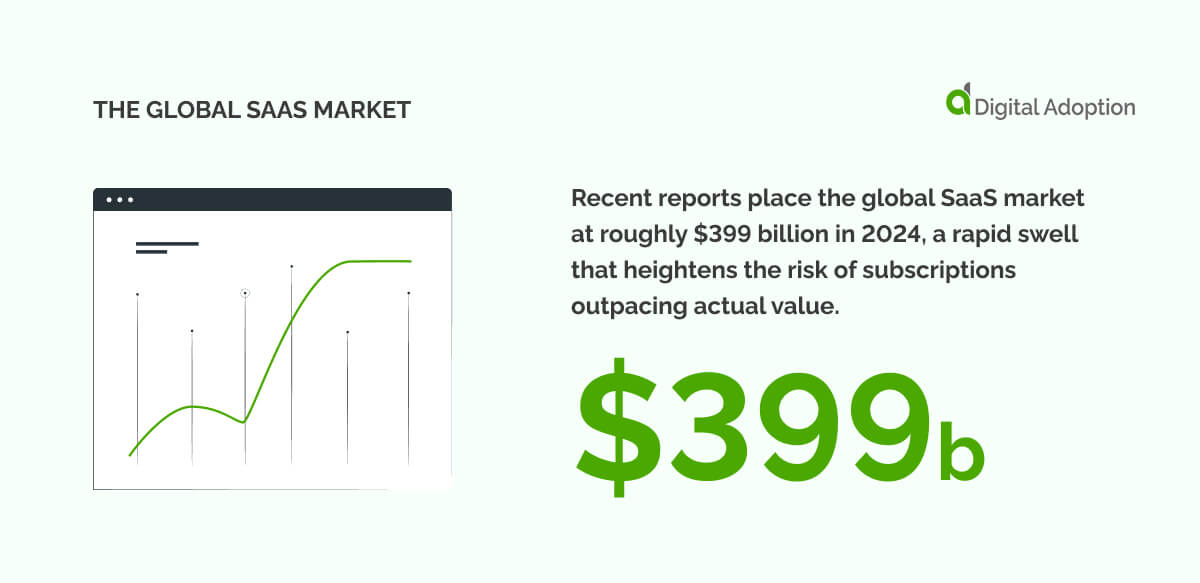
Recent reports place the global SaaS market at roughly $399 billion in 2024, a rapid swell that heightens the risk of subscriptions outpacing actual value.
As costs climb industry-wide, it’s easier for software to outgrow value. Without a clear strategy, renewals and upgrades turn into cost traps, and excess spend accumulates unnoticed.
The remedy is disciplined evaluation and the adoption of pricing models that reflect tangible usage. Insist on transparent tiers and terms, monitor integration and support costs, and validate usage rather than assumptions.
When software is deliberately chosen and consistently managed, it becomes an investment rather than a liability. Treat pricing as part of strategic planning, and you turn rising SaaS pressure into sustainable growth.
People Also Ask
-
What is the difference between SaaS pricing and traditional software pricing?SaaS pricing is a recurring subscription that adjusts as usage, features, or teams change. Traditional software is usually a one-time licence with optional maintenance fees. Enterprises lean toward SaaS because it lowers upfront cost, but it also means pricing shifts more frequently. Understanding these movements helps prevent long-term spending from drifting beyond expectations.
-
What are the benefits of build vs. buy for pricing software?Building gives full control over features and spending, but costs rise quickly through engineering time, maintenance, security, and scaling work. Buying offers predictable pricing and faster deployment, though you must track renewal terms and usage limits. The right choice depends on whether the long-term ownership cost of building outweighs the flexibility of adopting an existing platform.
-
How can enterprises prevent pricing surprises during renewalsRenewals often rise because usage expands quietly or small add-ons accumulate over time. Reviewing past activity, confirming the exact features teams rely on, and checking for tier thresholds removes uncertainty. Entering renewal conversations with clear data keeps pricing grounded in real value rather than default increases.