FACT CHECKED
What is blended learning and why does it matter?
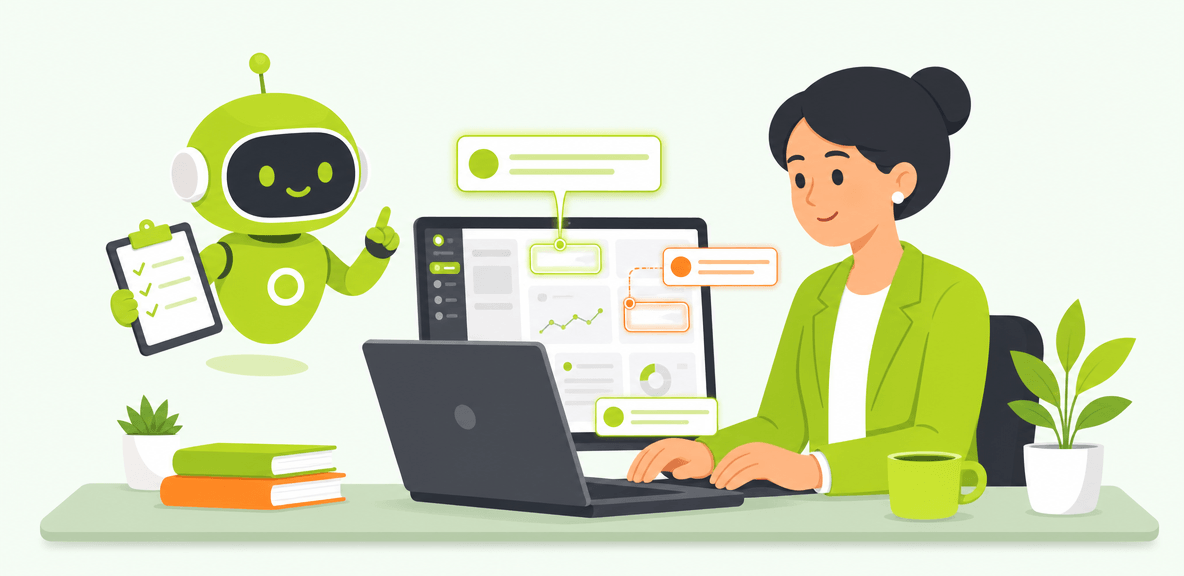
Blended learning is a structured approach that combines in-person instruction with digital learning experiences. The goal is not to add a few online modules to classroom training. The goal is to design the right mix of formats so learners can build knowledge, practice skills, and apply what they learned more effectively.
That distinction matters. Many organizations invest in training content but still struggle with retention, completion rates, and time-to-competency. Blended learning helps address those gaps by using each format for what it does best. Self-paced digital content can deliver foundational knowledge efficiently. Live instruction can focus on coaching, discussion, and feedback. In some environments, in-workflow support can reinforce learning when employees perform the task for the first time.
This is why blended learning remains relevant across corporate training, employee onboarding, compliance, higher education, and K-12 environments. It offers more flexibility than classroom-only delivery, more structure than fully self-directed online learning, and better scalability for distributed audiences.
Blended learning is also different from a few related terms that readers often compare:
- Traditional instructor-led training centers on face-to-face teaching with limited digital support.
- Fully online learning happens entirely through digital channels, with no in-person component.
- Hybrid learning often refers to a scheduling model where some learners attend in person while others participate remotely at the same time.
- Blended learning usually emphasizes intentional instructional design across multiple modalities, whether they happen at different times or in different settings.
Blended learning definition in practical terms
Blended learning is the intentional combination of in-person and digital learning experiences designed around specific learning outcomes.
In practical terms, that means the blend should match the learner’s context and the demands of the task. If the goal is concept transfer, self-paced content may be enough. If the goal is judgment, collaboration, or complex problem-solving, live facilitation often matters more. If the goal is accurate execution inside enterprise software, reinforcement may need to happen in the workflow itself.
Blended learning vs. hybrid learning
The terms are often used interchangeably, but they are not always the same.
Hybrid learning usually describes where learners participate. Some may be in a room while others join remotely.
Blended learning usually describes how learning is designed across formats.
That is an important difference for decision-makers. A hybrid class can still be poorly designed. A blended learning program, by contrast, is built around the idea that different modalities serve different instructional purposes.
What are the main blended learning models?
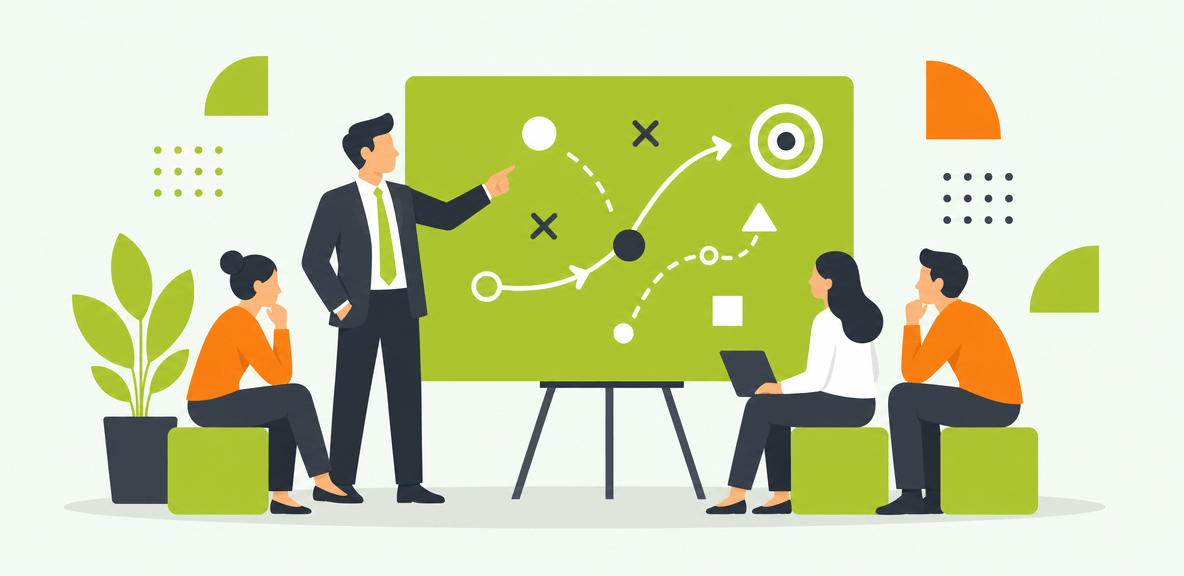
There is no single blended learning format that works everywhere. The right model depends on learner independence, content complexity, instructor capacity, and operational constraints.
The most common models are rotation, flipped classroom, flex, self-blend or a la carte, and enriched virtual. The mistake many teams make is choosing a model because it is familiar or fashionable, rather than because it fits the learning need.
Rotation and station rotation models
In a rotation model, learners move through a planned sequence of activities. These may include instructor-led teaching, peer collaboration, independent work, and digital learning modules.
A station rotation model is a more structured version of that approach. Learners rotate through specific stations, each designed for a different activity.
This model works best when:
- the learning environment is structured
- the audience benefits from guided pacing
- instructors need visibility into progress
- different activities reinforce the same objective
In K-12 and classroom-based settings, rotation models help balance group instruction with individualized digital practice. In enterprise settings, a similar structure can work for onboarding cohorts or role-based training programs where learners need a mix of content, coaching, and supervised application.
Flipped classroom model
In a flipped classroom, foundational content moves online and happens before the live session. That might include videos, readings, knowledge checks, or short e-learning modules. Live time is then used for discussion, practice, scenario work, and problem-solving.
This model works best when:
- learners can complete pre-work independently
- live sessions are valuable and limited
- the material benefits from active application
- instructors want to spend less time lecturing and more time coaching
For corporate learning teams, this is often an efficient model for manager training, leadership development, and software process education. Learners review the basics on their own, then use live sessions to work through realistic cases.
Flex, self-blend, and enriched virtual models
These models offer more learner autonomy.
- Flex model: Most content is delivered digitally, but instructors provide support, coaching, or intervention as needed.
- Self-blend or a la carte model: Learners add digital courses or modules to a primarily in-person program.
- Enriched virtual model: Learners complete most work online but still participate in required in-person sessions at defined points.
These models can scale well, especially for distributed teams or adult learners with variable schedules. But they also require more self-management, clearer support systems, and better progress visibility.
They work best when:
- learners are relatively independent
- scheduling flexibility is important
- instructor availability is limited
- organizations have strong analytics and support mechanisms
For enterprise use, these models are common in large, geographically distributed workforces where not every learner can attend the same live session.
What benefits does blended learning deliver and how should you measure them?
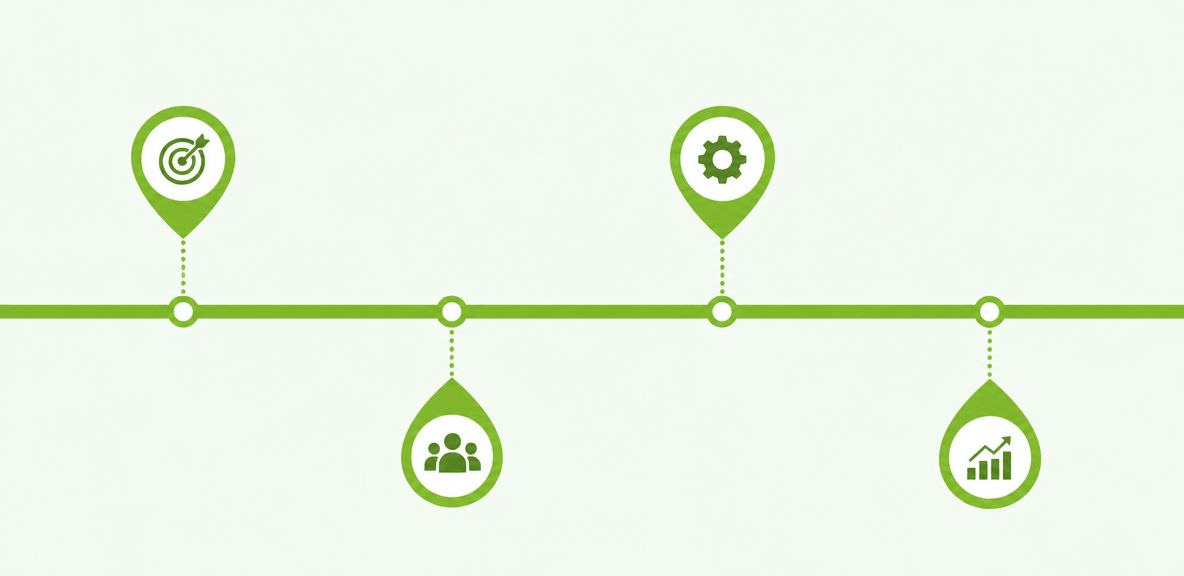
Blended learning can create value on both the learning side and the operational side. That is why it appeals to both educators and enterprise leaders.
Operational and learning benefits
A well-designed blended learning program can improve:
- engagement, by varying formats and reducing passive instruction
- knowledge retention, by spacing learning and reinforcing it over time
- accessibility and flexibility, by allowing learners to complete some work on demand
- scalability, by reducing dependence on live sessions for every topic
- training efficiency, by reserving instructor time for high-value interaction
- time-to-productivity, especially when live and digital elements align with actual job tasks
One practical advantage is that asynchronous content reduces scheduling pressure. Learners can complete foundational modules when it fits their schedule. Live time can then focus on coaching, application, and reinforcement instead of basic information transfer.
Blended learning examples across use cases
Blended learning looks different depending on the environment.
New hire onboarding: New employees complete self-paced orientation modules before joining live sessions with HR, managers, or peers. Follow-up support reinforces key systems and processes during the first weeks on the job.
Software rollout training: Employees review process changes and role-specific guidance in advance, then attend live sessions to practice real scenarios. For high-friction workflows, in-app guidance can support first-time execution in the software itself.
Manager enablement: Managers complete short digital modules on frameworks or policy updates, then use workshops for case discussion, coaching practice, and peer exchange.
University courses: Students review lectures and readings online, then use classroom time for labs, discussion, and applied analysis.
Classroom-based instruction: Teachers rotate students through direct instruction, small-group collaboration, and adaptive digital practice based on skill level.
How to measure blended learning ROI
Do not rely only on satisfaction scores. A positive survey does not tell you whether learning translated into performance.
A stronger measurement approach tracks:
- participation and completion rates
- time spent in each modality
- assessment performance before and after training
- time-to-productivity
- error reduction
- post-training support demand
- training hours saved
- instructor utilization
- performance on job-relevant tasks
In enterprise environments, the most useful question is simple: Did the program reduce the time and effort required for people to perform correctly?
For software training, that often means measuring fewer support requests, faster task completion, and fewer errors after go-live. For onboarding, it may mean shorter ramp time. For compliance, it may mean better completion rates and stronger assessment outcomes.
How do you design and implement a blended learning program?
Effective blended learning depends on more than content authoring tools or LMS access. It requires clear instructional design, manager reinforcement, learner support, and governance.
A practical implementation sequence looks like this:
- define outcomes
- assess learner needs
- choose the right blend
- map content to delivery mode
- pilot the program
- refine before scaling
Start with outcomes, not format
Begin with the performance outcome you want to change.
Theory-heavy content may work well in self-paced modules. Practice and feedback may require live facilitation. High-risk workflows, especially in enterprise software, often benefit from reinforcement at the moment of task execution.
This is where many programs break down. They optimize for convenience instead of learning transfer. A better approach is to ask what each part of the journey needs:
- awareness
- knowledge
- practice
- reinforcement
- performance support
Then assign the right modality to each step.
Choose the right technology stack
The technology stack should support the design, not drive it.
Most blended programs rely on a combination of:
- LMS platforms for enrollment, tracking, and course management
- virtual classroom tools for live remote instruction
- content libraries and authoring tools for self-paced learning
- collaboration platforms for discussion and peer interaction
- in-app guidance for software-based workflows where employees need help in the flow of work
That last category is especially important in enterprise software training. A learner may complete training successfully and still struggle later when facing a live system, unfamiliar data, or an infrequent process. In those cases, contextual guidance inside the application can reinforce training in a way an LMS cannot.
Pilot, measure, and scale
Start with a high-impact use case rather than a broad rollout.
Good pilot candidates include:
- new hire onboarding for a fast-growing function
- a software rollout with known adoption risk
- compliance training with high support volume
- manager training tied to measurable business outcomes
From there, gather learner feedback and performance data. Look at completion, assessment quality, support demand, and on-the-job execution. Scale only after you have validated that the blend improves both adoption and effectiveness.
For larger organizations, governance also matters. Standardization, accessibility, reporting, and integration with learning and work systems all become more important as the program grows.
What are the limits of blended learning and how can you avoid common mistakes?
Blended learning can improve outcomes, but it does not do so automatically. If the content is weak, the workflow is unclear, or the technology creates friction, blending formats will not solve the underlying issue.
Common blended learning challenges
The most common implementation risks include:
- low learner participation in self-paced components
- uneven digital access or accessibility gaps
- poor facilitation in live sessions
- content overload across too many channels
- fragmented tools that make the experience harder to navigate
- weak manager reinforcement after training
- a gap between completion and actual job performance
Instructor readiness also matters. A blended approach changes the role of the facilitator. Live sessions become less about presenting content and more about coaching, discussion, and application. Not every instructor is prepared for that shift without support.
How blended learning fits with digital adoption
Blended learning is strong for foundational knowledge and structured practice. It is less effective on its own when learners need real-time support in complex software environments.
That is where digital adoption can complement the learning strategy. In-app guidance supports employees at the moment of execution, when knowledge from training may have already decayed or when the workflow is too infrequent to master through a single session. For enterprise teams rolling out systems such as SAP, Workday, Salesforce, or ServiceNow, that combination can be more practical than expecting training alone to close the gap.
In other words, blended learning helps people prepare. Digital adoption helps them perform.
People Also Ask
-
What is blended learning?Blended learning is an instructional approach that combines in-person teaching with digital learning experiences in a structured way. The mix is designed around learning outcomes rather than convenience alone.
-
What is the difference between blended learning and hybrid learning?Hybrid learning usually refers to a participation format, such as some learners attending in person and others remotely. Blended learning usually refers to a broader instructional design approach that intentionally combines multiple learning modalities.
-
What are the main blended learning models?The main blended learning models are rotation, station rotation, flipped classroom, flex, self-blend or a la carte, and enriched virtual. Each model fits different levels of learner independence, instructor support, and operational flexibility.
-
What are some blended learning examples?Examples include new hire onboarding with self-paced modules plus live coaching, software rollout training with online prep and instructor-led practice, manager enablement workshops supported by digital pre-work, university courses with online lectures and in-person discussion, and classroom instruction that rotates students between stations.
-
Is blended learning effective for corporate training?Yes, when it is designed around business outcomes and learner needs. It can improve flexibility, reduce scheduling pressure, and support stronger knowledge retention. In corporate settings, it is especially useful for onboarding, compliance, manager training, and software enablement.
-
What are the disadvantages of blended learning?Common disadvantages include low participation in self-paced components, inconsistent learner access, weak facilitation, fragmented tools, and limited reinforcement after training. It can also fall short when complex tasks require real-time guidance in the workflow rather than preplanned training alone.