FACT CHECKED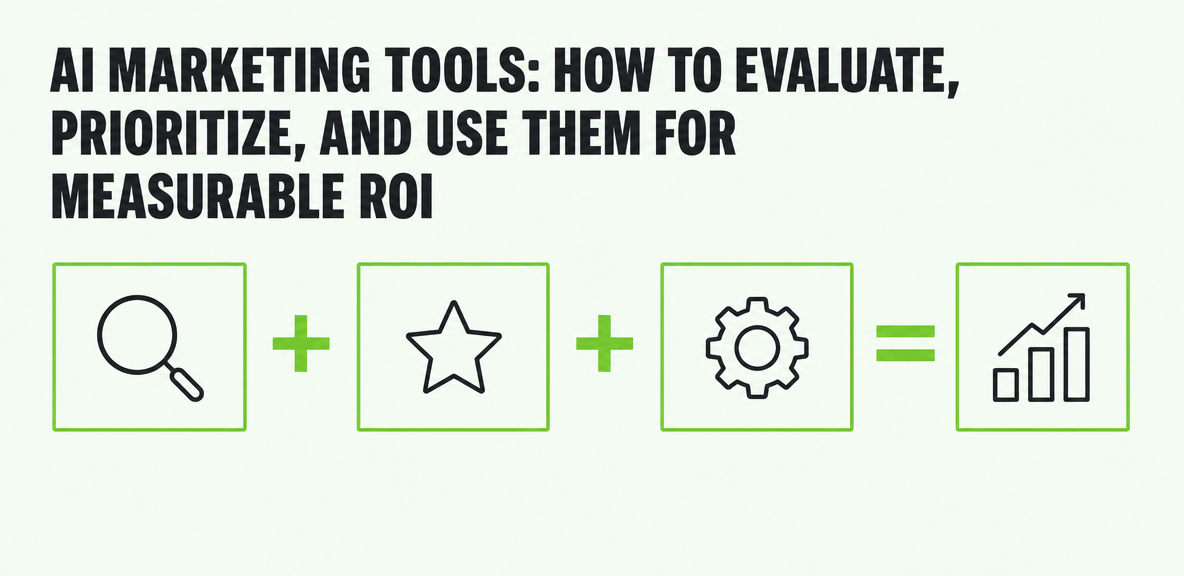
AI marketing tools are now part of the standard software evaluation cycle for many teams. The driver is simple. Marketing organizations are under pressure to launch faster, personalize more effectively, and produce more assets without scaling headcount at the same rate.
In practical terms, AI marketing tools are software applications that use machine learning, generative AI, predictive models, or automation to support marketing workflows. That can include drafting campaign copy, identifying audience segments, optimizing bids, summarizing analytics, or recommending next-best actions.
The important distinction is this: the best AI marketing tools are not the ones with the longest feature list. They are the ones that remove friction from high-volume workflows and improve outcomes a team can actually measure. That may mean faster content production, higher testing velocity, lower manual effort, or stronger campaign performance. It rarely means replacing marketing judgment altogether.
What AI marketing tools are and where they actually create value
AI adoption is accelerating because the operating model of modern marketing has become harder to sustain manually. Teams manage more channels, more content formats, and more segmentation logic than they did even a few years ago. AI promises leverage, but only when applied to the right work.
What counts as an AI marketing tool?
The category includes three broad types of products:
- Standalone AI tools that handle a specific job, such as writing assistance, image generation, or SEO analysis
- AI features embedded in existing platforms such as email platforms, ad networks, CRM systems, analytics tools, and content suites
- Workflow automation layers that connect systems and trigger AI-supported actions across multiple steps
This distinction matters because many teams already own useful AI capabilities inside platforms they have not fully adopted. Before adding another subscription, it is worth checking whether an existing system already supports the workflow in question.
Common categories of AI marketing tools
Most searches for ai marketing tools map back to a familiar set of use cases:
- Content creation and optimization
- SEO and search research
- Email and lifecycle marketing
- Social media management
- Paid advertising and media optimization
- Analytics and reporting
- Personalization and customer experience
- Market and competitor research
- Design and creative production
- Workflow automation and orchestration
These categories often overlap. A single ai marketing app may cover several lightweight needs, while an enterprise platform may specialize deeply in one area.
What the best AI marketing tools help teams improve
The strongest use cases usually tie back to operational outcomes:
- Faster campaign production cycles
- Better audience segmentation
- More consistent experimentation
- Lower manual effort in repetitive tasks
- Clearer reporting for decision-makers
- Improved ability to repurpose content across channels
The value comes from reducing execution drag. If a tool produces interesting outputs but does not improve throughput, quality, or decision speed, it is unlikely to justify long-term adoption.
How to choose the right AI marketing tools for your team and tech stack
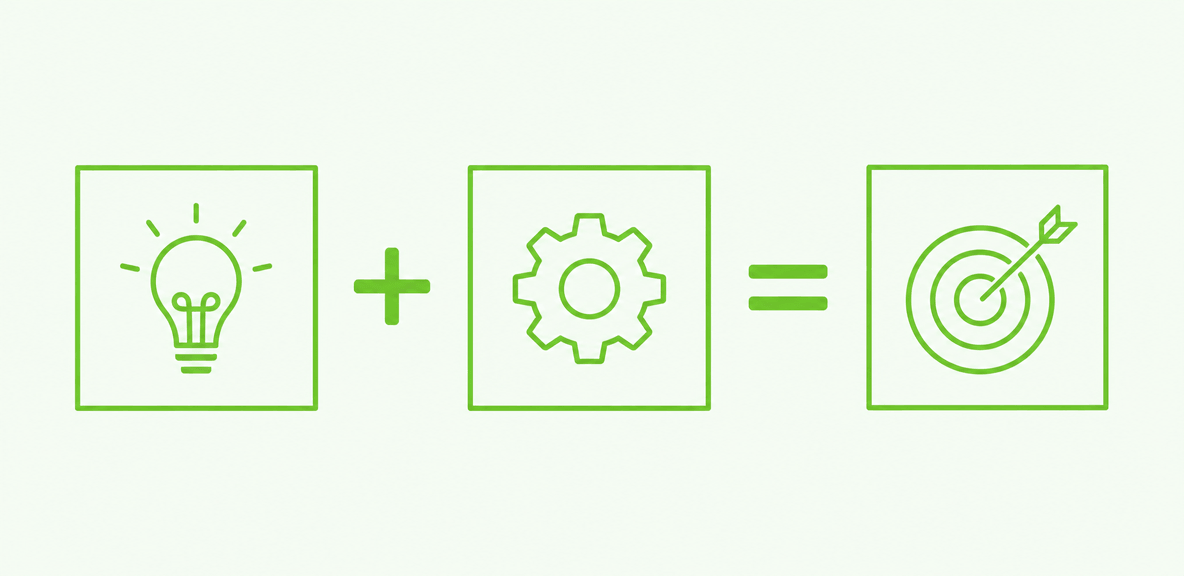
Tool selection should start with business goals and workflow constraints, not vendor popularity. That matters even more for enterprise teams with complex martech stacks, data governance requirements, and multiple stakeholder groups. It also matters for ai marketing tools for small business teams, where the main question is often whether a tool pays back quickly enough to keep.
Start with the workflow, not the tool
Begin by mapping repeated marketing tasks. Common examples include:
- Campaign briefing
- Asset creation
- Review and approvals
- Audience targeting
- Performance reporting
- Optimization decisions
This approach surfaces where work actually slows down. In some teams, the bottleneck is first-draft creation. In others, it is reporting assembly, handoffs between teams, or delays in launching tests. A useful AI tool should improve one of those recurring points of friction.
Selection criteria that matter most
Once the workflow is clear, evaluate tools against practical criteria:
- Model quality and relevance to the task
- Output consistency across users
- Brand controls and style alignment
- Data privacy and retention policies
- Permissions and access controls
- Analytics and performance visibility
- Collaboration features
- Multilingual support
- Integration with current systems
- Total cost of ownership, including training and administration
For most organizations, output quality is only one part of the decision. Governance, integration, and operating cost often determine whether a tool can scale.
Questions enterprise buyers should ask vendors
Enterprise buyers should go beyond demos and ask direct operational questions:
- What deployment models are supported?
- How is customer data handled, retained, and isolated?
- Is the product ready for security and procurement review?
- How deep are the integrations with existing CRM, CMS, CDP, analytics, and ad platforms?
- Are outputs auditable?
- What human review controls exist before content or decisions go live?
- How does the vendor help customers measure outcomes after launch?
These questions help separate useful platforms from products that look strong in a demo but create downstream risk.
How selection criteria differ for small teams
Small teams usually need lower implementation lift and faster time to value. In that context, priorities shift toward:
- Ease of use
- Transparent pricing
- Built-in templates
- Minimal setup
- Ability for one ai marketing app to replace several narrow tools
That does not remove the need for governance. It simply means the acceptable complexity threshold is lower.
The main categories of AI marketing tools and the best-fit use cases for each

A useful market view starts with jobs to be done, not a generic list of the best ai marketing tools.
AI tools for content strategy, writing, and optimization
These tools support idea generation, briefs, outlines, drafts, repurposing, and optimization. They can help teams produce more variants faster and maintain editorial consistency across channels.
They are most useful when content demand is high and internal review is disciplined. Human review remains essential for factual accuracy, differentiation, tone, and brand judgment.
AI tools for SEO, research, and competitive intelligence
SEO-focused tools help with keyword clustering, SERP analysis, topical gap detection, intent classification, and tracking shifts in search behavior.
Their value is strongest when teams need faster research cycles and better prioritization. They are less useful when search strategy is weak or when teams lack a process to turn insights into published content.
AI tools for email marketing and lifecycle campaigns
Email AI use cases include subject line testing, send-time optimization, segmentation support, personalization, and nurture flow recommendations.
The payoff can be meaningful because lifecycle programs are recurring and measurable. But performance still depends on list quality, deliverability health, and clear segmentation logic.
AI tools for paid media and campaign optimization
In paid media, AI can support budget allocation, bid optimization, creative testing, and audience modeling. These use cases often produce value quickly because the feedback loop is relatively short.
The constraint is data quality. If conversion tracking is unreliable, optimization models will amplify the wrong signals.
AI tools for social media, video, and creative production
These tools help with caption generation, post scheduling, short-form video editing, image generation, and design assistance. They can reduce production time for high-volume channel work.
They also carry brand-safety risk. Review processes matter, especially when visual content or public-facing copy is generated at scale.
AI tools for analytics, attribution, and decision support
Analytics tools increasingly use AI for forecasting, anomaly detection, dashboard summaries, and conversion insights. These capabilities can make reporting more actionable for busy teams.
But analytics quality still depends on governance. If source systems are inconsistent, attribution rules are unclear, or campaign naming is undisciplined, AI summaries will not solve the underlying problem.
AI tools for personalization and customer experience
Personalization tools support product recommendations, website experiences, conversational interfaces, and next-best-action prompts. Their role is to improve relevance at the point of interaction.
They tend to work best when customer data is connected, permissions are clear, and teams can test experience changes against conversion goals.
Best free AI tools for marketing: where free plans help and where they fall short
The best free ai tools for marketing can be useful for experimentation. They help teams test prompts, compare outputs, and explore a category before committing budget.
The common limits are predictable:
- Lower usage caps
- Fewer collaboration features
- Reduced security controls
- Limited integrations
- Lower output consistency at scale
Free plans are best treated as evaluation environments, not long-term operating infrastructure.
How to measure ROI from AI marketing tools without inflating expectations
AI does not create value on its own. Results depend on process design, data quality, governance, and actual team adoption. A tool that saves one person time in isolation may not improve business performance if the broader workflow stays unchanged.
The core ROI metrics to track
A practical ROI model should focus on measurable changes such as:
- Time saved per asset or campaign
- Content throughput
- Speed to launch
- Conversion lift
- Cost per acquisition
- Engagement rate
- Testing velocity
- Reduction in agency, freelance, or production costs
The right metrics depend on the workflow. Content tools should be measured differently from bidding or personalization tools.
How to run a fair pilot
A fair pilot usually includes five steps:
- Select one workflow with meaningful volume
- Define baseline metrics before the tool is introduced
- Limit variables so the comparison is credible
- Document human effort, not just system outputs
- Review results over a fixed period
This approach helps teams avoid broad claims based on anecdotal wins.
Where AI marketing tools usually underperform
Common failure patterns include:
- Weak first-party data
- Unclear brand standards
- Fragmented martech stacks
- Poor prompt discipline
- No clear workflow owner
In these cases, AI often exposes operational weaknesses rather than fixing them.
How to decide whether a tool is worth expanding
Expansion decisions should rest on a few practical thresholds:
- Repeatable time savings
- Measurable performance improvement
- Acceptable compliance and brand risk
- Adoption across multiple users or teams
If a tool performs well only for one advanced user, it may not be ready for broader rollout.
Limitations, risks, and implementation realities leaders should plan for
AI marketing tools can accelerate work. They cannot fix broken messaging, weak offers, poor data hygiene, or an unclear strategy. Those are management and operating model issues.
The biggest mistakes teams make with AI marketing tools
The most common errors are predictable:
- Chasing novelty instead of solving a defined workflow problem
- Buying too many tools at once
- Automating low-value work first
- Treating AI outputs as final without review
- Ignoring downstream maintenance and governance costs
These mistakes create complexity faster than value.
Governance and approval controls
Strong governance usually includes:
- Human-in-the-loop review
- Clear data usage policies
- Shared prompt libraries
- Brand guardrails
- Legal review where needed
- Documentation standards for regulated industries
Without these controls, quality and compliance drift over time.
What a strong AI marketing stack looks like in practice
In practice, a strong stack is usually compact. It combines a few high-value tools across content, campaign execution, analytics, and workflow coordination. The goal is not to add more apps. It is to create a manageable system where data, approvals, and reporting stay connected.
For many teams, embedded AI within existing platforms will carry more value than another standalone tool, especially when adoption is stronger and integration work is lighter.
When to add adoption support for new AI workflows
This point is often missed. New AI features do not fail only because the technology is immature. They also fail because teams are trained once and then expected to change their daily habits on their own.
That is especially true in large software environments where marketing, operations, analytics, legal, and IT all interact across shared systems. When AI-supported workflows span multiple applications and approval steps, in-the-flow guidance can reduce confusion and improve consistency. This is where digital adoption support becomes relevant. If teams need to use new features correctly inside complex enterprise systems, guidance embedded in the workflow can help reinforce the process after launch.
People Also Ask
-
What are the best AI marketing tools for content creation, SEO, and email marketing?The best AI marketing tools depend on the workflow you need to improve. For content, prioritize tools that support briefs, drafting, repurposing, and editorial consistency. For SEO, look for clustering, SERP analysis, and gap detection. For email, focus on segmentation, subject line testing, personalization, and send-time optimization. The strongest choice is the one that improves measurable execution, not the one with the broadest feature set.
-
How do I choose AI marketing tools for small business without overspending?Start with one repeated workflow that consumes real time, such as email creation, social scheduling, or content drafting. Then look for tools with transparent pricing, built-in templates, and a short setup cycle. Small teams should favor software that replaces multiple lightweight tools and produces value quickly.
-
Are there any best free AI tools for marketing that are actually useful?Yes, free tiers can be useful for experimentation, training, and early comparisons. They are often good enough for testing prompts, exploring categories, or supporting occasional content tasks. They usually fall short on scale, collaboration, governance, and security, so they are rarely sufficient as a long-term solution for growing teams.
-
How do enterprise teams measure ROI from AI marketing tools?Enterprise teams typically measure ROI through time savings, campaign throughput, conversion impact, cost per acquisition, testing velocity, and reduced agency or production spend. The most reliable approach is to run a controlled pilot, establish baseline metrics, document human effort, and review results over a defined period before expanding usage.
-
What is the difference between an AI marketing app and a full AI marketing platform?An AI marketing app usually solves a narrower task, such as copy generation, image creation, or social scheduling. A full AI marketing platform typically supports multiple workflows, integrates with broader systems, includes governance controls, and offers stronger collaboration and analytics. The right fit depends on team size, process complexity, and integration needs.
-
What are the biggest risks of using AI marketing tools in regulated or brand-sensitive industries?The main risks include hallucinations, bias, privacy exposure, copyright concerns, inconsistent brand output, and weak auditability. In regulated or brand-sensitive environments, teams need stronger review controls, documentation standards, data policies, and approval workflows before scaling AI-generated content or decisions.