FACT CHECKED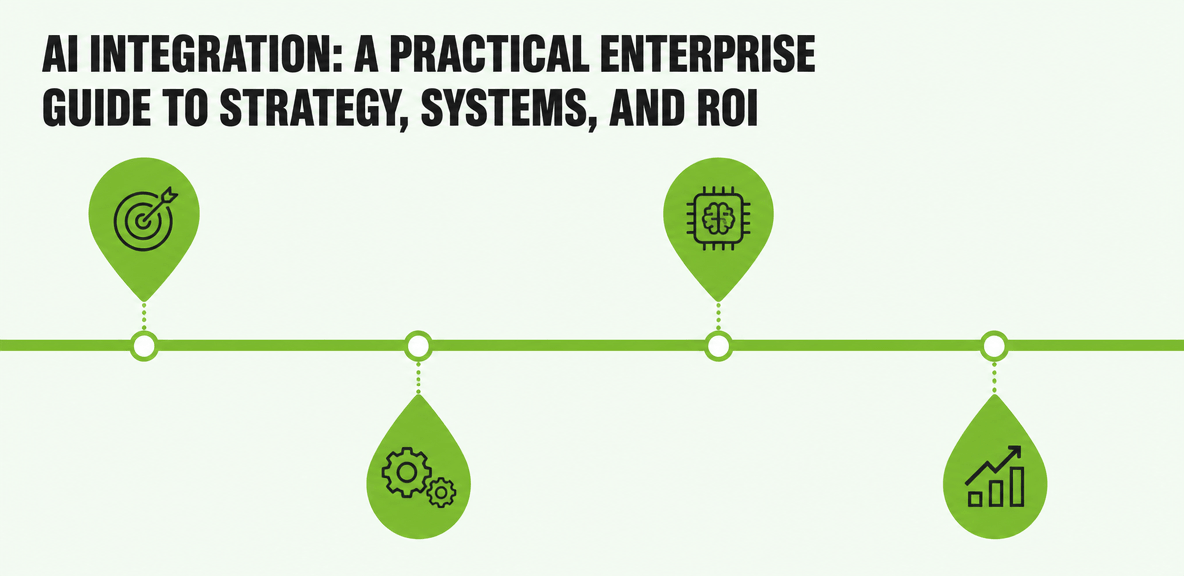
What is AI integration and why does it matter in the enterprise?
AI integration is the process of embedding AI capabilities into existing business applications, workflows, and decision points. The goal is not to run AI as a standalone experiment. It is to make AI useful inside the systems employees already use every day.
That distinction matters. Many enterprises have already tested chatbots, built isolated automations, or funded data science pilots. But pilots do not create value unless they change daily work. AI integration closes that gap by connecting models to real processes, real applications, and real users.

Why does ai integration in business matter now? Because enterprise leaders are under pressure to produce measurable outcomes from technology investments. They need faster task completion, better software utilization, lower support costs, and less friction across core workflows. AI is increasingly part of that equation, but only when it is operationalized inside tools such as SAP, Salesforce, Workday, and ServiceNow.
AI integration is also different from simple chatbot deployment. A chatbot may answer questions, but it does not necessarily improve process execution. It is different from one-off automation as well, because integration connects AI to a broader workflow and feedback model. And it is different from a data science proof of concept, because the focus is not model performance alone. The focus is business performance.
How AI integration works in practice
In practice, AI integration usually involves several layers working together:
- Data inputs that provide the model with relevant enterprise information
- Model layer where prediction, generation, classification, or recommendation occurs
- Orchestration that routes prompts, actions, and decisions across systems
- Application integration that embeds AI into enterprise platforms and workflows
- User interface where employees interact with AI in context
- Governance for security, access, compliance, auditability, and oversight
- Feedback loops that show where outputs help, where users hesitate, and where workflows need refinement
This operating model is what separates enterprise integration from experimentation. The technical model matters, but so do the workflow design and governance around it.
AI integration vs. AI adoption
Integration makes AI available inside enterprise systems. Adoption determines whether employees actually use it correctly and consistently.
That is a critical difference. An organization can technically integrate AI into a service desk or HR platform and still see weak results if employees do not trust the outputs, do not understand when to use them, or bypass the feature entirely. This is where digital adoption matters. Embedded guidance, analytics, and workflow support help ensure AI-enabled processes are used as intended.
Where AI integration delivers the most business value
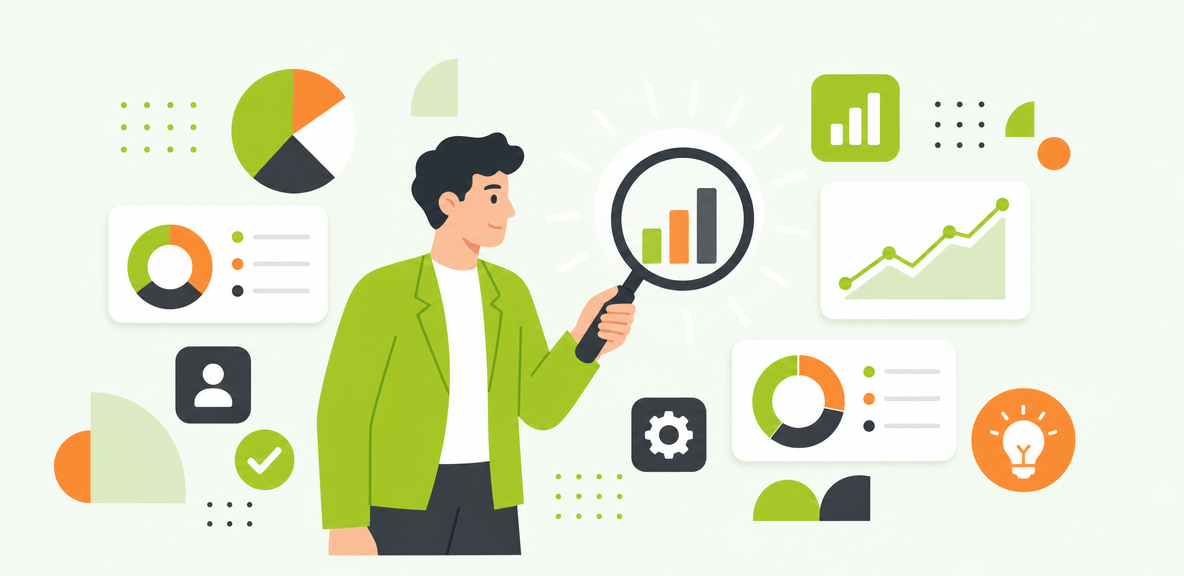
The strongest AI integration use cases tend to appear in high-volume workflows where employees repeat similar tasks, rely on multiple systems, and lose time to manual work. In these environments, AI can reduce effort and improve consistency without requiring employees to leave the application they are already using.
Common areas of value include:
- Customer service through case summarization, response suggestions, and intelligent routing
- HR operations through employee self-service, policy guidance, and onboarding support
- IT support through ticket classification, knowledge retrieval, and guided resolution steps
- Finance workflows through document review, exception handling, and reconciliation support
- Sales enablement through CRM recommendations, next-best actions, and account summaries
- Knowledge retrieval through contextual search and document summarization inside enterprise systems
The business value usually shows up in practical metrics: faster task completion, reduced manual work, improved decision support, fewer support escalations, and better workflow completion rates.
Industry demand is also growing in regulated sectors. Ai integration in healthcare and ai integration in education are strong examples, though both require tighter governance because they handle sensitive data, compliance requirements, and higher consequences for error.
Common use cases for ai integration in business
The most durable use cases are usually straightforward:
- AI-assisted ticket routing in IT and customer support
- Employee self-service for HR and internal operations
- Document summarization for contracts, policies, and case notes
- Workflow recommendations inside ERP, CRM, or HCM systems
- Predictive insights surfaced directly within core enterprise applications
These use cases succeed because they fit into work employees are already doing. They do not ask users to learn a new destination. They improve an existing one.
Industry examples: healthcare and education
Ai integration in healthcare often focuses first on administrative efficiency. Examples include documentation support, patient communication workflows, appointment coordination, and internal knowledge access for staff. In many organizations, the near-term opportunity is not replacing clinical judgment. It is reducing operational drag around it.
Ai integration in education often supports student services, staff productivity, and personalized guidance. This may include automated service triage, knowledge retrieval for administrative staff, and contextual assistance across enrollment or advising workflows. As in healthcare, the governance standard must be higher because privacy, fairness, and human review are central.
What enterprises need before they start AI integration
Enterprises usually get better results when they treat AI integration as an operational change initiative, not just a technical deployment. That starts with readiness.
The core requirements are:
- A clear business problem
- Usable and accessible data
- System interoperability
- Stable underlying processes
- Security and compliance controls
- Executive ownership
The best starting point is usually a high-volume, repeatable workflow with visible friction and measurable baseline metrics. If a process is already inconsistent, poorly governed, or constantly changing, AI may expose those weaknesses faster without solving them.
An ai integration tool can help connect models, workflows, and enterprise applications without adding unnecessary complexity. But tooling alone does not create ROI. Change management and user enablement are equally important. Employees need to understand what the AI does, when to rely on it, and how the workflow has changed.
How to choose the right first use case
A good first use case usually has three characteristics:
- High frequency
- High training burden
- Clear financial impact
That is why onboarding, case handling, and service request resolution are often strong candidates. They generate enough volume to measure change, enough friction to justify intervention, and enough consistency to support a controlled rollout.
What to look for in an AI integration tool
When evaluating an ai integration tool, enterprises should look for:
- Broad integration support across major enterprise applications
- Governance controls for access, privacy, and auditability
- Analytics that show usage, friction points, and performance trends
- Workflow support, not just standalone prompts
- Maintainability as applications and processes change
- Compatibility with systems such as SAP, Salesforce, Workday, and ServiceNow
The goal is to reduce operational complexity, not add another disconnected layer to manage.
A step-by-step framework for successful AI integration
A practical AI integration sequence is usually more effective than a broad transformation plan. Start small, measure carefully, and scale where the evidence supports it.
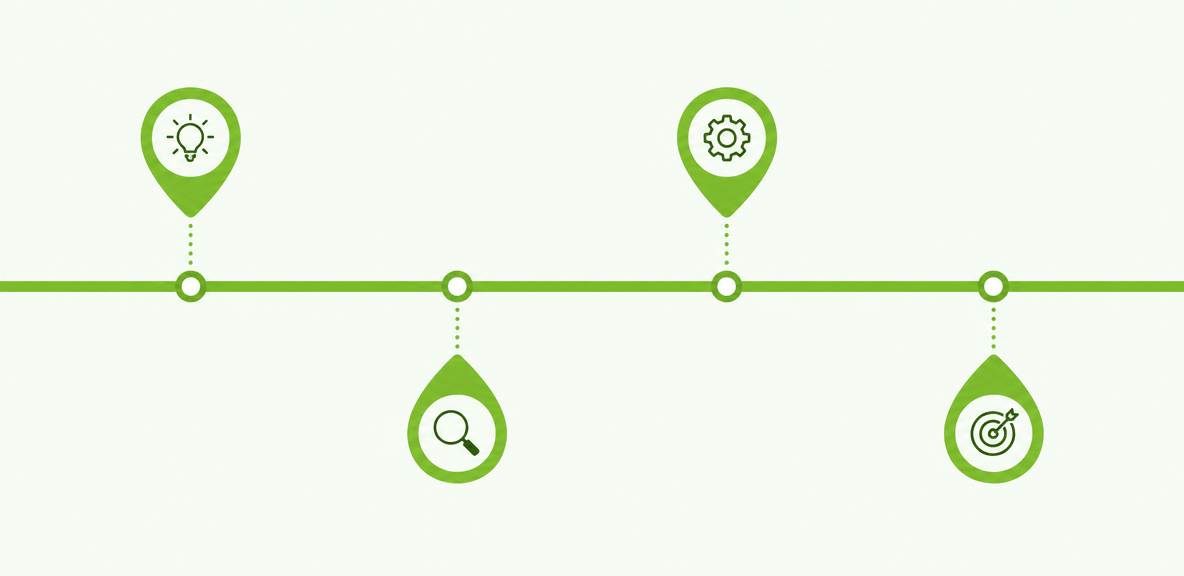
A typical framework looks like this:
- Define objectives
- Assess data and systems
- Map workflows
- Pilot narrowly
- Measure outcomes
- Scale selectively
ROI should be modeled using a mix of productivity gains, support cost reduction, onboarding acceleration, and software utilization improvements. That gives leaders a more realistic view than a single savings estimate.
Embedded guidance and analytics also matter during rollout. When new AI-enabled workflows are introduced, employees often need in-context support to complete tasks correctly. Guidance reduces hesitation. Analytics show where the workflow still breaks down.
Step 1: Define the workflow and success metrics
Before implementation begins, set baselines for:
- Cycle time
- Error rates
- Ticket volume
- Completion rates
- Employee effort
Without baseline metrics, organizations struggle to prove whether AI changed anything meaningful.
Step 2: Pilot in one workflow before scaling
A focused pilot reduces risk. It also surfaces process issues early, before they spread across multiple teams or systems.
This approach creates evidence for broader rollout. If the pilot improves one service workflow, leaders can evaluate whether the same operating model applies elsewhere. If the pilot fails, the organization learns where the process, data, or user experience needs work.
Step 3: Measure adoption, not just technical deployment
Technical deployment is only the first milestone. Enterprises also need to know:
- Are employees using the AI feature in live workflows?
- Where do they hesitate or abandon the process?
- Which prompts, guidance, or automations improve completion?
This is where workflow analytics and digital adoption capabilities become valuable. They help organizations see whether AI is truly being used at the point of work, not just whether it was activated.
Challenges, limitations, and realistic expectations for AI integration
Most AI integration barriers are operational, not conceptual. Common issues include poor data quality, legacy systems, fragmented ownership, privacy constraints, compliance requirements, employee resistance, and model inaccuracy.
Enterprises should also keep expectations realistic. AI integration can improve specific workflows when the process, data, and governance are sound. It does not fix broken operations on its own. If the workflow is poorly designed, AI may only accelerate inconsistency.
Regulated use cases need even more discipline. Human oversight, auditability, and strong controls are essential for managing hallucinations, bias, security risk, and compliance exposure.
Why AI integration projects stall
AI integration projects often stall for predictable reasons:
- Unclear use cases
- No baseline metrics
- Weak process design
- Limited user training
- Overreliance on broad proofs of concept
These failure patterns are common because organizations focus on the model before they define the workflow. In enterprise settings, the workflow usually determines value.
How to scale without creating new friction
Sustainable scale depends on operational discipline:
- Governance standards
- Workflow documentation
- Update management
- Employee support
- Continuous optimization
As AI expands across systems, these practices prevent fragmentation. They also help organizations adapt when enterprise applications change, policies evolve, or user behavior reveals new friction points.
People Also Ask
-
What is AI integration in business?AI integration in business is the process of embedding AI capabilities into existing enterprise systems, workflows, and decision points so employees can use them during real work. It goes beyond experiments or standalone tools by connecting AI to operational processes.
-
How do you integrate AI into existing enterprise systems?Most organizations start by identifying a specific workflow, assessing data and system readiness, connecting a model through orchestration and application integrations, piloting in one process, and then measuring both workflow performance and user adoption before scaling.
-
What should companies look for in an AI integration tool?Companies should look for integration breadth, governance controls, workflow support, maintainability, analytics, and compatibility with major enterprise platforms such as SAP, Salesforce, Workday, and ServiceNow. The tool should support operational scale without increasing complexity.
-
What are the biggest challenges of AI integration?The biggest challenges usually include poor data quality, legacy systems, fragmented ownership, privacy and compliance requirements, employee resistance, and model accuracy issues. Weak process design and lack of baseline metrics also slow projects down.
-
How is AI integration in healthcare different from other industries?Ai integration in healthcare typically requires stricter governance because of sensitive data, regulatory requirements, and the consequences of error. Many healthcare organizations begin with administrative workflows such as documentation, communication, and coordination rather than high-risk clinical decisions.
-
How do you measure ROI from AI integration?ROI is usually measured through a mix of productivity gains, support cost reduction, onboarding acceleration, and software utilization improvements. The most credible approach compares baseline workflow metrics before implementation against post-deployment results over time.