FACT CHECKED
Online learning is no longer a niche delivery method. It is now a core part of how people build skills, how organizations onboard employees, and how enterprises support software and process change at scale.
But the term covers a wide range of models. A self-paced online learning course for an individual professional is very different from a global compliance program delivered to 20,000 employees. A live virtual class can solve one problem. In-app workflow guidance can solve another. When organizations treat all of this as the same category, results suffer.
The practical question is not whether online learning works. It is which model fits the outcome you need, what it can realistically deliver, and where it needs reinforcement to turn learning into performance.
What online learning is and how it works
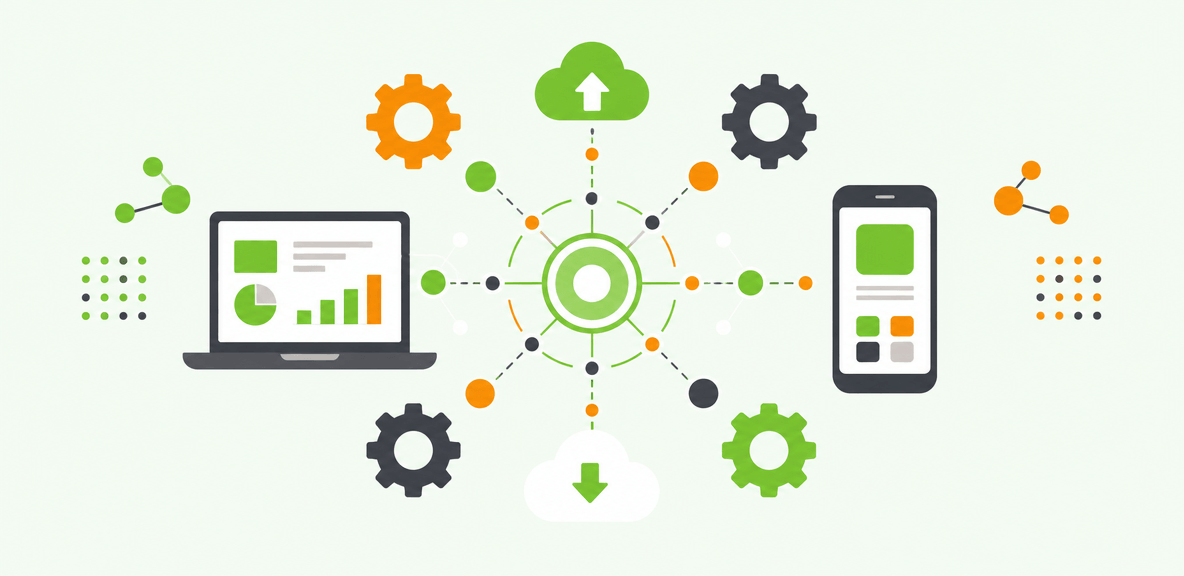
Online learning is the delivery of education, training, or skill development through digital channels. That broad definition applies across enterprise, academic, and individual settings.
In academic contexts, online learning often refers to degree programs, certificates, or instructor-led virtual classes. In enterprise settings, it usually means employee training delivered through a corporate platform, virtual classroom, or internal content hub. For individuals, it can include self-paced courses, professional certificates, technical bootcamps, and subscription-based learning libraries.
The delivery models vary, but the core principle is the same: content, instruction, and assessment are accessed through connected digital systems rather than a physical classroom.
Format choice matters because it affects engagement, completion rates, learner support, and business ROI. A short self-paced module may be efficient for policy training. A complex system rollout may require pre-work, live practice, and support inside the application after go-live.
What counts as online learning today?
Online learning today includes far more than formal online degrees.
It can include:
- university and continuing education programs
- corporate training and compliance courses
- professional certificates and technical credentials
- internal enablement for sales, HR, IT, and operations teams
- customer education and partner training
- online learning courses delivered through websites, marketplaces, and enterprise systems
This is why the category can feel confusing. A public course marketplace, an internal training portal, and a structured leadership development program may all be described as online learning, even though they serve different goals.
Synchronous vs. asynchronous online learning
The two main delivery models are synchronous and asynchronous.
Synchronous online learning happens live. Learners attend at a set time, often through a virtual classroom. This works best when discussion, coaching, live Q&A, or practice feedback matters. It is common in workshops, cohort instruction, and high-touch professional training.
Asynchronous online learning happens on the learner’s schedule. Content is available on demand through recorded lessons, readings, assessments, or exercises. This is often more practical for distributed teams, global workforces, and busy professionals who need flexibility.
Many organizations also use:
- cohort-based learning, where a group moves through material together over a defined timeline
- self-paced learning, where each learner progresses independently
In practice, blended models are common. A company might assign self-paced pre-work, run a live session for discussion, and then provide follow-up resources after the training event.
Online learning website, platform, or program: what is the difference?
These terms are often used interchangeably, but they are not the same.
An online learning website is usually a destination where learners access content. It may host articles, videos, tutorials, or courses.
A course marketplace is a public platform where multiple instructors or providers publish online learning courses for broad audiences.
A corporate learning platform is an enterprise system used to assign, track, govern, and report on internal training.
A training program is the full learning experience. It may include multiple courses, live sessions, assessments, manager checkpoints, certifications, and follow-up support.
That distinction matters when evaluating options. A website may offer good content. A platform may offer governance and reporting. A program may deliver stronger outcomes because it includes reinforcement and accountability.
Why online learning continues to grow

Online learning continues to expand because the operating environment has changed. Teams are more distributed. Roles evolve faster. Software changes more often. And organizations need ways to reskill employees without constantly pulling them into classrooms.
Research from organizations such as McKinsey and Deloitte Insights has consistently pointed to the growing need for continuous skill development as technology reshapes work. That applies not only to leadership and compliance training, but also to technical domains where content becomes outdated quickly.
The main benefits of online learning for individuals
For individuals, the value is usually straightforward.
Key benefits include:
- schedule flexibility for working professionals and caregivers
- access to more course options than a local provider can offer
- repeatable content that can be reviewed more than once
- lower cost compared with some in-person programs
- easier career progression through certificates, portfolio building, or targeted skill development
This is especially relevant in fast-changing fields. Demand for areas such as data analysis, cybersecurity, and online learning machine learning courses continues to grow because professionals need to update skills without stepping away from work for long periods.
The main benefits of online learning for organizations
For organizations, online learning offers operational advantages at scale.
Common benefits include:
- scalability across locations and time zones
- consistent delivery of core content across regions
- faster onboarding for new employees
- measurable completion data and assessment results
- reduced travel and instructor costs compared with classroom delivery
When designed well, online learning can support practical outcomes such as time-to-productivity, compliance readiness, and role-based capability building.
Where online learning fits in a modern skills strategy
Most enterprises do not use online learning for just one purpose.
It often supports:
- employee onboarding
- manager training
- software and system rollouts
- compliance education
- customer and partner enablement
- ongoing upskilling and reskilling
In other words, online learning is now part of the broader skills infrastructure. It helps transfer knowledge efficiently. The harder challenge is making sure that knowledge is applied consistently in real work.
How to choose the right online learning approach

The right approach depends on four variables: the learning goal, the audience size, the required depth, and the operational constraints.
If the goal is exploration, a free course may be enough. If the goal is a recognized credential, a university-backed or paid certificate program may make more sense. If the goal is enterprise-wide compliance or onboarding, the decision shifts toward governance, reporting, and integration.
When free online learning is enough and when it is not
Free online learning can be highly effective for foundational knowledge and early exploration.
It works well when learners need to:
- test interest in a topic
- build basic familiarity
- compare subject areas before committing
- supplement formal education or work experience
It usually falls short when organizations need:
- formal credentialing
- manager or learner accountability
- reporting and auditability
- standardized delivery at scale
- workflow-specific training tied to internal systems or processes
That does not make free options low quality. It simply means the use case is different.
How to evaluate online learning courses
Whether the course is free or paid, public or internal, the evaluation criteria should stay practical.
Look at:
- instructor credibility and real-world expertise
- curriculum depth relative to the learner’s starting point
- recency of content, especially for technical topics
- assessments that check understanding
- peer interaction where discussion adds value
- completion expectations and time commitment
- proof of skill gained, such as projects, certifications, or demonstrated application
For enterprise buyers, the question is not just whether the course is good. It is whether it supports the job behavior you need to improve.
Questions to ask before selecting an online learning platform
If you are choosing a platform rather than a single course, ask narrower operational questions.
These usually include:
- What reporting capabilities are available?
- Can it integrate with HR, identity, or IT systems?
- Does it support mobile access?
- Can it handle localization and multiple languages?
- Does it meet accessibility requirements?
- How is content governance managed?
- What is the total cost of ownership, including administration and maintenance?
A strong content library may not be enough if the platform creates reporting gaps or governance problems later.
What online learning does well and where it falls short
Online learning is effective for distributing knowledge at scale. It is less reliable when the desired outcome depends on repeated practice, behavior change, or execution inside complex workflows.
That does not mean online learning is weak. It means its strengths are specific.
Common challenges learners face
Learners often struggle with:
- motivation and follow-through
- time management
- digital fatigue
- isolation in self-paced formats
- difficulty applying concepts to real work tasks
These issues help explain why completion rates can vary widely across programs. Good content alone does not guarantee consistent progress.
Common challenges organizations face
Organizations face a different set of problems:
- content sprawl across too many systems
- low engagement after launch
- weak alignment to business outcomes
- incomplete reporting
- a gap between course completion and actual adoption
This last point matters most. Completion data tells you that training was consumed. It does not automatically tell you that employees can perform the task correctly, efficiently, and repeatedly.
Why online learning alone does not solve software adoption
This becomes especially visible in enterprise software rollouts.
Online learning can prepare users before go-live. It can explain concepts, processes, and role expectations. But when employees enter a complex application for the first time, they often still need contextual help at the moment of use.
A course may show how a workflow works in theory. It does not always remove friction when the user is staring at a live screen in Workday, SAP, Salesforce, or ServiceNow and is unsure what to do next.
That is why software adoption often requires support beyond pre-launch courses.
How to make online learning more effective in the real world
The strongest online learning programs connect training to performance before, during, and after delivery. They do not treat course completion as the finish line.
Design for outcomes, not just course completion
Start with business metrics, not content lists.
Depending on the use case, success measures may include:
- time-to-productivity
- error reduction
- support ticket volume
- process completion rates
- license utilization
This approach changes how training is designed. Instead of asking whether people finished the module, you ask whether the training helped people do the job better.
Use blended support across the learning journey
In practice, the best results often come from combining methods.
A blended approach can include:
- online courses for foundational knowledge
- live sessions for discussion and practice
- manager reinforcement after training
- job aids and documentation for reference
- searchable knowledge resources for ongoing support
These methods do not compete. They solve different points in the learning journey.
Add in-app guidance when training meets real software complexity
For software rollouts and workflow change, organizations often need one more layer: support inside the application itself.
This is where digital adoption platforms become relevant. Platforms such as WalkMe can complement online learning by providing step-by-step guidance, automation, and analytics inside the workflow. Instead of asking employees to remember training from a course completed two weeks earlier, the organization can reinforce the process in the moment of need.
That model is especially useful when:
- the software is complex
- the process is high stakes
- the user population is large
- support teams cannot handle a prolonged ticket spike after launch
Online learning prepares users. In-app guidance helps them apply what they learned in the real environment.
People Also Ask
-
What is online learning and how does it work?Online learning is education or training delivered through digital systems rather than a physical classroom. It can be live or self-paced and may include lessons, assessments, discussion, and certifications. In enterprise settings, it is often used for onboarding, compliance, software training, and upskilling.
-
What are the main benefits and disadvantages of online learning?The main benefits are flexibility, broader access, lower delivery costs, consistent content, and easier scalability. The main disadvantages include low completion risk, limited accountability in some formats, digital fatigue, and difficulty transferring knowledge into real work without reinforcement.
-
Are free online learning courses worth it?Yes, free online learning can be valuable for exploration, foundational knowledge, and supplemental learning. It is usually less suitable when a learner or organization needs formal credentials, structured accountability, reporting, or training tied to internal workflows.
-
How do I choose the best online learning platform or website?Start with the use case. Then evaluate content quality, reporting, accessibility, mobile support, localization, integration needs, governance, and total cost of ownership. A good choice depends less on popularity and more on fit for your audience and operational requirements.
-
What is the difference between online learning and an LMS?Online learning is the broader activity of learning through digital channels. An LMS, or learning management system, is one type of platform used to deliver, assign, and track that learning. In short, online learning is the outcome and method category. An LMS is one of the systems that can support it.
-
Can online learning improve employee onboarding and software adoption?Yes, online learning can improve onboarding by delivering consistent foundational training and reducing time spent on repetitive instruction. It can also support software adoption before go-live. But for complex enterprise applications, many organizations find that courses alone are not enough. They often complement training with documentation, live support, and in-app guidance to help employees complete real workflows correctly.