FACT CHECKED
Training often fails at the moment people need to act.
An employee completes a course on policy. A manager finishes leadership training. A student studies a chapter and passes a quiz. Then real work begins, and the decision still goes wrong. The issue is rarely information alone. It is the gap between knowing something in theory and applying it in context.
That gap matters more than most learning metrics show. Completion rates and quiz scores can look healthy while judgment, timing, and task execution remain weak. This is one reason so many organizations keep investing in training yet still struggle with inconsistent performance, avoidable errors, and low software adoption.
Scenario-based learning addresses that problem directly. Instead of asking learners to absorb content passively, it puts them in realistic situations where they must interpret context, make choices, and see consequences. That makes it especially useful for high-stakes tasks, customer interactions, compliance, onboarding, manager development, and software training.
For L&D, HR, enablement, and education leaders, the appeal is practical. Scenario-based learning can improve retention, strengthen decision-making, and create evidence that training is changing behavior, not just checking a box.
What is scenario based learning?
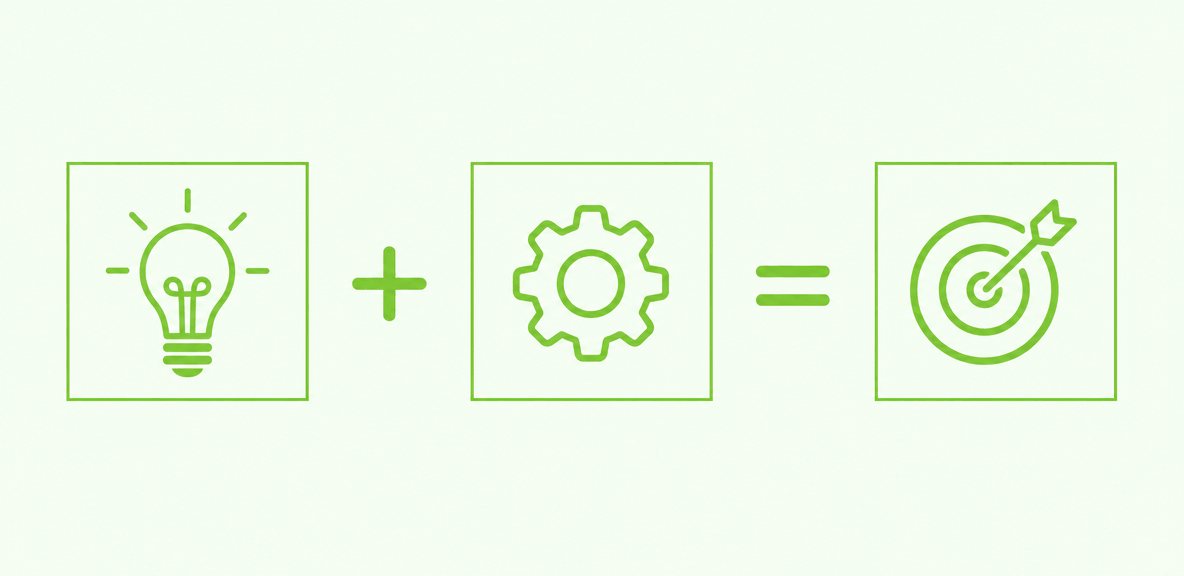
Scenario-based learning is a training approach that uses realistic situations to help learners practice decisions, actions, and consequences in context.
That definition matters because it separates scenario-based learning from content wrapped in a story. A true scenario is not just a narrative device. It is a structured practice environment built around a clear performance objective.
In a workplace setting, that might mean responding to a customer complaint, handling a policy violation report, or completing a complex workflow in enterprise software. In a classroom, it might mean evaluating a historical decision, choosing a lab procedure, or working through a business case.
The common thread is simple: the learner is asked to do something with what they know.
Scenario based learning vs. traditional instruction

Traditional instruction is often designed for transfer of information. It explains concepts, presents examples, and tests recall. That works well for foundational knowledge, definitions, and reference material.
Scenario-based learning does something different. It asks learners to apply knowledge under realistic conditions.
Instead of reading about what to do, learners decide what to do. Instead of receiving information in a linear sequence, they navigate ambiguity, tradeoffs, and consequences. Instead of getting a single correct answer detached from context, they practice choosing among plausible options and learn why one response fits the situation better than another.
This is why scenario-based learning is often more effective when the goal is behavior change. The learner is not only remembering content. They are rehearsing performance.
How scenario based learning works
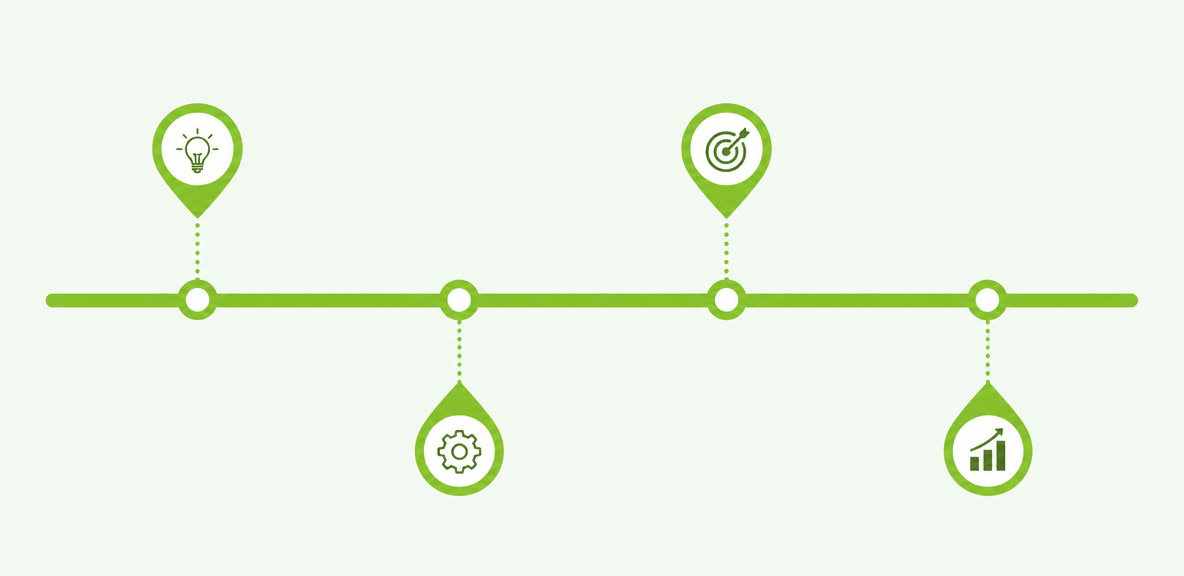
At its core, scenario-based learning recreates a decision point.
The learner is placed in a role, given a situation, and asked to respond using available information. Their choices trigger consequences, feedback, or a new branch in the experience. In stronger designs, the scenario also includes reflection so the learner can connect the result to future action.
The mechanics are usually straightforward:
- a realistic context
- a clear learner role
- a challenge or trigger event
- information that mirrors what the learner would actually have
- a set of plausible choices
- consequences or outcome paths
- feedback and reflection
What makes this effective is not novelty. It is alignment with how people learn to perform in complex environments.
Adult learners tend to engage more when training is relevant to what they need to do. Situated learning suggests people learn more effectively when knowledge is tied to the environment in which it will be used. Retrieval practice supports active recall rather than passive review. Experiential learning emphasizes learning through action and reflection.
You do not need to present these theories formally to use them well. In practice, they all point in the same direction: people remember and apply learning better when they use it in context.
The essential elements of a strong scenario
A strong scenario usually includes six elements.
Trigger event
Something happens that requires action. A customer escalates a complaint. A manager receives a report of misconduct. A new employee must complete a procurement task in unfamiliar software.
Learner role
The learner knows who they are in the situation and what they are responsible for. This gives the decision meaning.
Available information
The scenario provides the facts, signals, constraints, and incomplete context that a person would realistically have in the moment.
Realistic options
The choices should be plausible. If one option is obviously correct and the others are obviously wrong, the learner is not practicing judgment.
Immediate feedback
The learner should see why a choice helped or harmed the outcome. That feedback can be direct, delayed, or embedded in the next stage of the scenario.
Outcome path
Choices should lead somewhere. Even simple scenarios should show consequences clearly enough that learners understand cause and effect.
What scenario-based learning theory says about retention and transfer
The practical lesson from scenario-based learning theory is this: retention improves when learning is active, contextual, and tied to decisions the learner expects to face later.
People are more likely to remember material when they retrieve it rather than simply reread it. They are more likely to transfer it when they practice using it under conditions that resemble real performance. They are also more likely to notice weak judgment when a scenario exposes uncertainty, pressure, or incomplete information.
That is why realism matters more than complexity.
A highly produced scenario with dramatic storytelling adds little if it does not reflect the actual pressures, constraints, and tradeoffs learners face. A simple scenario built from a real support ticket, audit finding, classroom challenge, or customer interaction is often far more useful.
What are the benefits of scenario based learning?
The main benefits of scenario-based learning are better knowledge transfer, stronger decision-making, higher engagement, safer practice, and clearer performance measurement.
Those benefits matter because many learning programs succeed in completion but fail in application. Scenario-based learning helps close that gap by moving practice closer to reality.
It is especially useful when mistakes are costly, public, regulated, or difficult to correct. In those cases, training needs to do more than inform. It needs to prepare people to act well the first time, or at least recover quickly when conditions are not ideal.
In practical terms, organizations often use scenario-based learning to improve:
- time to proficiency
- error reduction
- policy adherence
- customer interaction quality
- workflow completion quality
- confidence at the moment of action
Improves judgment, not just recall
Many tasks do not depend on memorizing a single answer. They depend on interpreting context.
A manager deciding how to respond to performance concerns must weigh timing, documentation, tone, and policy. A service agent must judge whether a frustrated customer needs empathy, escalation, or a correction. A healthcare professional must prioritize safety, protocol, and changing information.
Scenario-based learning helps people practice those decisions before the stakes are real. It teaches them to distinguish between options that all look reasonable at first glance, which is much closer to how work actually feels.
Creates safe practice before real-world performance
Safe practice is one of the strongest arguments for this approach.
When learners make mistakes inside a scenario, the cost is instructional. When they make the same mistakes with a customer, patient, employee, or regulated process, the cost is operational.
This is why scenario-based learning is common in compliance, healthcare, cybersecurity, customer service, and leadership development. It creates space for errors, feedback, and correction before live consequences appear.
It is also useful for software adoption. A learner can practice a multi-step workflow, encounter realistic exceptions, and see what happens when they choose the wrong path. That reduces avoidable errors later, especially in systems where mistakes are hard to reverse.
Makes learning outcomes easier to measure
Scenario-based learning can generate more meaningful evidence than a basic completion certificate.
You can assess which choices learners made, where they hesitated, which branches they followed, how often they selected risky responses, and whether performance improved after feedback. You can also connect those signals to job metrics such as reduced errors, faster time to competency, or better workflow completion.
That does not mean every scenario automatically produces measurable impact. It means the format lends itself to measurement when designed around clear behaviors and outcomes.
Scenario-based learning examples across workplace and classroom settings
Scenario-based learning appears in many forms because the underlying logic is flexible. The method works anywhere learners need to apply judgment, not just repeat information.
In corporate settings, scenarios often simulate risky decisions, customer interactions, people management, and software workflows. In education, they often take the form of case discussions, role-play, simulations, and group problem solving.
Digital tools can extend these formats through branching scenarios, guided simulations, and in-workflow reinforcement after formal training. That matters because a single training event rarely changes behavior on its own. Reinforcement in the flow of work or study often determines whether the training sticks.
Scenario-based learning examples for employee training
Below are common workplace examples.
Compliance
A supervisor receives a report that a team member may be violating policy. The learner must choose how to document the issue, who to notify, and what not to say during the initial conversation.
Customer service
A customer contacts support after a failed order and an earlier poor experience. The learner must decide how to respond, what to prioritize, and whether to escalate.
Manager coaching
A first-line manager needs to address repeated underperformance from an employee who has valid personal stressors but is also missing deadlines. The learner must balance accountability with support.
Sales conversations
A buyer raises an objection about pricing, implementation risk, or switching cost. The learner chooses how to respond, what to ask next, and whether to advance or pause the opportunity.
Healthcare
A clinician or support worker receives incomplete information, shifting symptoms, or a handoff problem. The scenario tests prioritization, communication, and protocol adherence.
Cybersecurity
An employee receives a suspicious message that appears to come from an executive or trusted vendor. The scenario tests whether the learner notices warning signs and follows the correct reporting process.
Software adoption
A new hire must complete a purchase requisition, update a customer record, or submit a change request across multiple systems. The learner works through the process, makes decisions, and gets feedback on both policy and system use.
These are strong fits because they involve context, imperfect information, and consequences that matter.
Scenario-based learning in the classroom
In academic settings, scenario-based learning supports both knowledge application and discussion.
Historical decision reenactments
Students evaluate what decision-makers knew at a given moment and choose among options before comparing their reasoning with actual outcomes.
Business cases
Learners review financial, operational, or market constraints and recommend a course of action, often defending it in discussion.
Science lab choices
Students decide how to set up an experiment, respond to unexpected results, or choose between methods based on safety, accuracy, and available resources.
Teacher education and classroom management
Future teachers respond to realistic classroom situations involving behavior, instruction pacing, family communication, or equity concerns.
Group problem solving
Learners work through a shared scenario, compare reasoning, and test assumptions together. This is especially useful when multiple perspectives improve the quality of analysis.
Scenario-based learning in the classroom is effective because it moves beyond content coverage and asks students to think like practitioners in the discipline.
Digital formats: branching, simulation, role-play, and guided practice
Different formats suit different learning goals.
Branching scenarios work well when you want learners to explore choices and consequences at scale. They are efficient for topics like compliance, service, and manager decisions.
Simulations fit tasks that involve systems, sequences, or process execution. They are often used in software training, technical procedures, or labs.
Role-play is useful when tone, conversation, or interpersonal judgment matters. It is common in coaching, teaching, negotiation, and healthcare communication.
Guided practice works when learners need support while performing a real or realistic task. In software contexts, this may include in-app prompts or structured walkthroughs that reinforce formal training.
The best format depends on learner volume, risk level, feedback needs, and available design resources. A branching scenario can cover many common decisions quickly. A higher-risk task may need simulation, observation, coaching, or repeated guided practice.
How to design scenario based learning that actually changes behavior
The strongest scenario-based learning starts with performance, not storytelling.
That is where many programs go off track. Teams invest heavily in production quality, characters, and branching paths before they define what learners should do differently after training. The result can look polished yet have little effect on real decisions.
A better approach is to begin with the target behavior or task. Then gather evidence from the work itself. Talk to subject matter experts, managers, frontline staff, instructors, or students. Review support tickets, audit findings, classroom observations, workflow data, and common errors. These sources reveal where learners struggle, what choices they face, and which mistakes are most costly.
Scenarios become credible when they reflect actual friction points. They become useful when they include feedback, rising complexity, and reinforcement beyond a single module.
1. Define the decision or behavior to practice
Start with an observable action.
What should the learner be able to do differently after training? Not “understand policy” or “know the system.” Those are too broad. Instead, define the decision or behavior in concrete terms.
Examples include:
- identify and escalate a possible policy violation correctly
- choose the right response to a frustrated customer
- document a coaching conversation appropriately
- complete a software workflow without skipping required steps
- select a safe lab procedure based on available conditions
This step gives the scenario a clear performance objective. It also makes measurement possible later.
2. Build scenarios from real friction points
The most credible scenarios usually come from patterns already visible in the organization or classroom.
Look at recurring incidents, high-frequency questions, exceptions, avoidable delays, quality issues, audit findings, and support requests. In software training, examine the places where users abandon workflows, enter the wrong data, or request repeated help. In classroom settings, review where students misapply concepts or struggle to justify decisions.
Using real friction points does two things. First, it makes the scenario believable. Second, it increases the chance that improved performance in training will matter in practice.
3. Write realistic choices and consequences
Strong choices are plausible.
If one answer is clearly right and the others are cartoonishly wrong, the learner is guessing the designer’s preference rather than exercising judgment. Better scenarios include options that reflect common habits, partial truths, or understandable mistakes.
Consequences should also feel real. A poor choice may create delay, confusion, risk, or the need for escalation. A strong choice may not solve everything immediately, but it should move the situation in the right direction.
This is especially important in leadership, service, compliance, and software scenarios, where the right answer is often the most appropriate next move, not a perfect resolution.
4. Add feedback, reflection, and reinforcement
Feedback is where much of the learning happens.
Do not stop at telling learners whether they were right or wrong. Explain why a choice worked, what risk it reduced, what signal it missed, or how it affected the next step. Reflection prompts can then help learners connect that feedback to future action.
Reinforcement matters too. A single scenario may improve awareness, but sustained behavior change often requires follow-up. That can include manager coaching, peer discussion, quick refreshers, job aids, instructor review, or workflow support inside the tools people use every day.
In software training, reinforcement is particularly important. Formal instruction may introduce the workflow, but in-app guidance and digital adoption support can help learners perform correctly when the task appears again in live systems.
When scenario based learning is the wrong choice or needs support
Scenario-based learning is powerful, but it is not universal.
It is usually not the best starting point for simple fact transfer, highly standardized reference information, or topics where learners first need basic instruction. If someone does not know the key terms, steps, or rules at all, they may need direct teaching before scenario practice will help.
It also fails when the design is weak. Unrealistic stories, poor branching logic, too much complexity, weak feedback, or no link to actual performance metrics can turn a promising method into expensive noise.
In many cases, scenario-based learning works best as part of a broader learning system. Learners may need foundational content first, then scenario practice, then coaching, discussion, job aids, assessments, or in-app support to sustain performance.
Common mistakes in scenario design
Several problems appear repeatedly.
Overproduced but low-value stories
High production quality does not make a scenario effective. If the decisions do not reflect real work, the scenario teaches little.
Unrealistic choices
Obvious right answers reduce the experience to a quiz.
Too much branching complexity
More branches are not always better. Complexity should match the importance of the decision and the depth of feedback required.
Weak or generic feedback
“Correct” is not enough. Learners need to understand why.
No performance link
If the scenario is not tied to a real behavior, task, or outcome, it becomes difficult to justify or improve.
What to use alongside scenario-based learning
Scenario-based learning often becomes more effective when paired with other supports.
Useful complements include:
- foundational content for concepts and policy basics
- facilitated discussion for nuance and peer reasoning
- guided practice for procedural tasks
- coaching for interpersonal or leadership behaviors
- job aids for infrequent tasks
- in-app guidance for software workflows
- assessments to check retention over time
This combination matters because people rarely improve through one format alone. They improve when learning, practice, and performance support work together.
How to evaluate success and choose the right next step
The best way to evaluate scenario-based learning is to measure whether learners make better decisions, perform tasks more accurately, and apply skills faster after training.
That requires more than checking completions. Start with the behavior the scenario was built to influence, then define the indicators that show improvement.
Metrics that matter
Useful measures often include:
- pre- and post-assessment results
- decision accuracy within the scenario
- quality of choices across branches
- completion rates and completion quality
- time to competency
- error reduction
- confidence shifts
- retention after a delay
- downstream business or classroom outcomes
For workplace learning, downstream outcomes may include fewer support tickets, stronger policy adherence, improved customer satisfaction, or better workflow completion. For education, they may include stronger written reasoning, more accurate lab decisions, or better class discussion performance.
Documenting results also helps stakeholders decide what to refine. If learners complete the scenario but still struggle on the job, the issue may be realism, feedback quality, or lack of reinforcement. If one branch consistently causes confusion, that may indicate either a useful learning challenge or a design flaw that needs revision.
Supporting assets can make this process easier. Many teams benefit from a scenario-based learning PDF, facilitator guide, rubric, or design template that standardizes how scenarios are built and reviewed.
A practical next step is to identify the real decisions where learners are currently failing, then build scenarios around those moments first. Start where mistakes are costly, frequent, or hard to correct. That is where scenario-based learning usually proves its value fastest.
People Also Ask
-
What is scenario based learning?Scenario-based learning is a training approach that places learners in realistic situations so they can practice decisions, actions, and consequences in context. It is designed to improve application, not just recall.
-
What are the main benefits of scenario-based learning?The main benefits are better knowledge transfer, stronger decision-making, higher engagement, safer practice, and more measurable learning outcomes. It is especially useful when real-world mistakes are costly or difficult to reverse.
-
How is scenario-based learning different from traditional instruction?Traditional instruction usually focuses on presenting information and testing recall. Scenario-based learning focuses on application. Learners must interpret context, choose an action, and learn from the consequences.
-
When should you use scenario-based learning?Use it when learners need to apply judgment, make decisions under realistic conditions, or practice tasks where errors matter. Common use cases include compliance, customer service, manager training, healthcare, cybersecurity, onboarding, and software adoption.
-
When is scenario-based learning not the best fit?It is usually not the best fit for simple fact transfer, basic reference material, or topics where learners need foundational instruction first. In those cases, direct teaching or job aids may be more appropriate before scenario practice begins.
-
What makes a good scenario?A good scenario includes a clear trigger event, a defined learner role, realistic information, plausible options, meaningful consequences, and specific feedback. It should be tied to a performance objective rather than built as a story alone.
-
How do you measure whether scenario-based learning is working?Measure whether learners make better choices and perform better after training. Useful metrics include decision accuracy, completion quality, time to competency, error reduction, retention, and downstream business or classroom outcomes.
-
What digital formats work best for scenario-based learning?Branching scenarios work well for decision-heavy topics at scale. Simulations fit system and process tasks. Role-play is useful for interpersonal situations. Guided practice works well when learners need support while performing a real task, including software workflows supported by digital adoption tools.