FACT CHECKED
Why the AI governance platform conversation changed from policy to board-level accountability
The AI governance platform conversation has changed because the enterprise AI conversation has changed. Most large organizations are no longer experimenting with one model in isolation. They have deployed copilots, embedded AI features, autonomous agents, and governance programs at the same time. Yet many still cannot answer two basic questions with confidence: is AI being used safely, and is it producing measurable value?
That gap is now visible at the board level. Gartner research finds 95% of CIOs expect significant AI value from their investments. But according to a 2024 Gartner survey of more than 3,000 managers, only 8% of employees use AI frequently in ways that meaningfully improve their work. The issue is no longer whether a policy exists. The issue is whether your organization can prove that AI is controlled inside day-to-day workflows and that those workflows are producing outcomes.
That is why governance can no longer stop at model policy, documentation, or compliance reviews. In practice, governance now includes how AI is introduced into work, how employees interact with it across applications, where risk appears, and whether the organization can produce evidence of correct use. The strongest AI governance platform strategy connects risk controls, workflow visibility, and measurable outcomes.
Why interest in ‘ai governance platforms gartner’ and the ‘market guide for ai governance platforms’ is rising
Enterprise buyers are searching for analyst guidance because the market has become harder to evaluate on vendor claims alone. Regulatory pressure is increasing. Agent sprawl is growing across departments. Shadow AI remains a real concern. And many organizations have discovered that governing a model in a controlled environment is not the same as governing AI across Microsoft 365, SAP, Salesforce, ServiceNow, and custom applications.
In that environment, searches for terms like ai governance platforms gartner and the market guide for ai governance platforms reflect a practical need. Buyers want a credible framework for comparing categories, understanding scope, and separating policy tooling from platforms that can support enterprise accountability.
The new governance question: can you prove AI is controlled and actually working?
For CIOs, CISOs, and CFOs, governance and ROI are now linked concerns. A policy may define acceptable AI use. A risk committee may approve a tool. But if employees abandon AI-assisted workflows, move to unsupported tools, or create manual workarounds when copilots hit application boundaries, the organization still has a governance problem.
The new question is not just whether AI is allowed. It is whether you can prove it is controlled and actually working.
What is an AI governance platform and what should it actually govern?
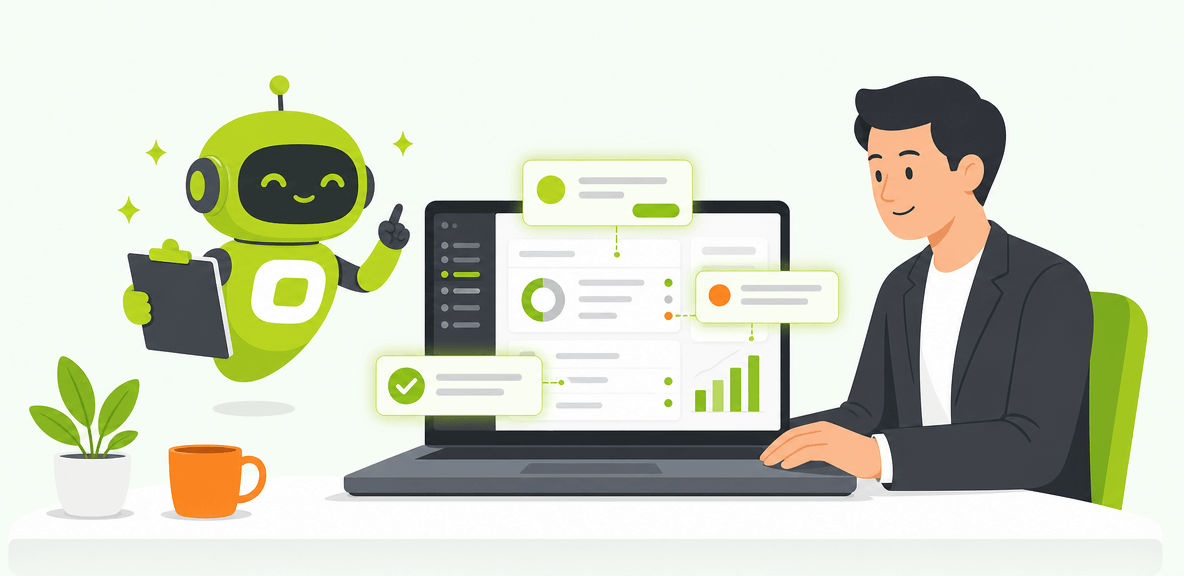
An AI governance platform is enterprise software that helps organizations inventory AI systems, assign ownership, enforce policy, monitor risk, and document compliance across the AI estate. At a minimum, it should help you understand what AI is in use, who is accountable for it, what rules apply, and whether those rules are being followed.
That definition matters because the category is often confused with adjacent tools. An AI governance platform is not the same as model monitoring software, which focuses on performance, drift, or output quality. It is not the same as data governance, privacy tooling, or a general GRC system. And a standalone AI governance tool may solve one narrow need, such as policy documentation or approvals, without giving you broader operational visibility.
In enterprise environments, governance should extend beyond models to include copilots, enterprise AI assistants, autonomous agents, embedded AI features, and employee-facing workflows. If AI is influencing decisions or actions inside your software stack, it belongs inside the governance scope.
A practical governance stack looks like this:
- Discover what AI systems and features are in use
- Classify them by risk, use case, data sensitivity, and ownership
- Control usage through policy, approvals, and role-based permissions
- Monitor behavior, exceptions, and operational risk
- Prove compliance and business outcomes with auditable evidence
Core capabilities enterprise buyers expect
Most enterprise buyers expect an AI governance platform to support:
- AI inventory and registry
- Policy management and regulatory mapping
- Risk scoring and classification
- Approval workflows and ownership assignment
- Audit trails and evidence capture
- Monitoring and exception reporting
- Executive and board-ready reporting
Those capabilities are necessary. But they are not always sufficient.
What most definitions miss: governance at the moment of use
Many market definitions focus on policy, lifecycle management, and compliance artifacts. That is important, but incomplete. What they often miss is governance at the moment of use.
In enterprise reality, the highest-risk gap often appears when an employee moves from asking AI for help to acting on that help inside a live workflow. That is where prompts vary, context gets lost, unsupported tools appear, and auditability weakens. If your governance approach cannot see how AI is used inside enterprise applications, it may be governing the intent of AI without governing the behavior of AI.
Why AI governance fails when it ignores AI adoption and cross-application work

AI governance fails when it treats AI as a lab problem instead of an enterprise workflow problem. Models may be tested. Policies may be approved. But enterprise work still happens across interfaces, forms, handoffs, and exceptions that no single model governance process can fully control.
This is the structural gap many organizations run into. Copilots and agents are powerful, but often blind to the employee’s live screen. They stop at application boundaries. They may assist with a draft, summary, or recommendation, but they cannot always show whether the employee completed the next task correctly across the rest of the workflow.
That is where governance risk appears in daily operations:
- Prompt inconsistency between users and teams
- Manual workarounds when AI stops at a system boundary
- Unsupported tool usage outside approved channels
- Abandoned workflows when context is missing
- Limited auditability across applications with uneven API coverage
These are not abstract concerns. They are common enterprise software realities.
The visibility gap between approved AI and actual AI use
Approved policies can still fail if you cannot see where AI is being used, where employees drop off, and where cross-application friction appears. A licensed copilot may be approved at the platform level, but that does not tell you whether employees are using it in the workflows it was purchased for, or whether they abandon it the moment they need to act in another system.
Without that visibility, governance becomes partial. You know what should happen, but not what is happening.
Why governance without execution evidence creates a false sense of control
A documented policy is not the same as governed behavior. That distinction matters most when workflows move between systems that lack consistent API coverage or share context poorly.
If your governance platform can show that an AI use case was approved but cannot show whether the task was completed correctly, whether exceptions were triggered, or where employees reverted to manual behavior, it creates a false sense of control. In AI, oversight without execution evidence is not enough.
What to look for in an AI governance platform for enterprise environments
A useful buyer’s guide should reflect enterprise reality, not checklist marketing. The right AI governance platform should support both control and accountability. That means it should help you manage AI inventory and policy while also giving you visibility into workflow-level usage, exception points, and measurable outcomes.
Look for capabilities that support:
- Centralized AI inventory and ownership mapping
- Policy enforcement and approval workflows
- Monitoring tied to real usage, not only declarations
- Integration with existing governance, security, and compliance systems
- Reporting that works for audit teams and the board
If you are comparing an AI governance tool with broader platform categories, ask a practical question: does this product help us govern AI where work actually happens?
Evaluation criteria for CIOs, CISOs, and enterprise architecture teams
For enterprise buyers, the most useful evaluation criteria include:
- Clear ownership mapping by AI system and use case
- Approval workflows with accountable stakeholders
- Strong audit trails and evidence retention
- Privacy architecture suited to regulated environments
- Deployment flexibility across cloud, legacy, and custom applications
- Role-based controls and separation of duties
- Support for security, legal, risk, and business review processes
These criteria matter because governance decisions rarely sit with one team. The platform must support both oversight and operational use.
Why screen-level context and cross-application unification matter for governance
AI risk often appears where work crosses application boundaries. An employee may begin in Outlook, move to Salesforce, update a record in SAP, and submit a request in ServiceNow. If governance visibility stops inside one application, it misses the workflow where the real decision and execution risk lives.
Screen-level context matters because it shows what the employee is looking at in real time. Cross-application unification matters because enterprise work does not stay inside one system. Together, they give governance teams a more accurate view of how AI is actually influencing work.
How WalkMe supports governed AI execution and accountability
This is where WalkMe fits. The WalkMe action bar is complementary to copilots and governance investments. It does not replace a copilot, and it does not replace the need for governance systems of record. It completes them by helping enterprises govern AI where employees actually work.
The action bar provides:
- Screen-level context intelligence so AI can respond based on what the employee is seeing
- Cross-application unification across enterprise systems
- Workflow execution at the UI level where APIs do not exist
- Adoption analytics and ROI evidence that show whether AI-assisted workflows are being used and completed
That combination matters for governance because it brings policy closer to behavior. It gives organizations a way to connect approved AI use with actual workflow outcomes.
For security teams, architecture matters as much as capability. WalkMe acts at the UI level locally through direct interaction. No screenshots are taken and transmitted to cloud servers. That privacy distinction is important for organizations evaluating governed autonomous execution in regulated environments.
Realistic expectations: what an AI governance platform can and cannot do
An AI governance platform can improve oversight, policy enforcement, and evidence. It can help you document ownership, identify risk, and reduce blind spots. But it cannot fix a broken process, compensate for poor model quality, or replace weak executive ownership.
It also does not create AI adoption on its own. Governance platforms can define acceptable use and track compliance signals, but organizations still need change management, training, and in-workflow support if they want employees to use AI correctly and consistently. A 2024 Gartner survey identifies the top barriers to AI adoption as lack of training at 30%, change resistance at 30%, poor AI quality at 29%, and no process integration at 26%.
Implementation outcomes also depend on governance maturity, application complexity, stakeholder alignment, and whether the organization measures workflow outcomes rather than only policy completion.
Common mistakes in AI governance platform selection
Common selection mistakes include:
- Buying for regulatory checkboxes only
- Ignoring employee workflow data
- Treating governance as a one-time audit project
- Assuming one vendor can govern every AI scenario equally well
- Failing to account for cross-application work and limited API reach
These mistakes usually lead to a governance program that looks complete on paper but struggles in production.
How to define success before you buy
Before you buy, define success in measurable terms. Useful criteria include:
- AI inventory coverage across approved systems
- Policy adherence by use case and role
- Workflow completion rates for AI-assisted tasks
- Exception visibility across applications
- Time required to produce audit-ready evidence
Those metrics create a better buying process because they force alignment between governance goals and operational reality.
The future of the AI governance platform: from oversight to governed autonomous execution
The next phase of the AI governance platform market will move beyond static oversight toward active control of AI in live enterprise workflows. As agentic AI expands, organizations will need more than policy libraries and approval records. They will need policy, context, and deterministic action paths working together.
That is the direction of governed autonomous execution. Today, many enterprises still need help with visibility, adoption, and workflow evidence. Tomorrow, they will also need infrastructure that allows AI to act within approved boundaries, with traceability and control built in.
Organizations that govern AI only on paper will struggle to scale it. Organizations that connect governance to AI adoption and workflow execution will be better positioned to prove value, reduce risk, and extend AI into more complex processes over time.
Why the UI is becoming a critical governance surface
The UI is becoming a critical governance surface because so much enterprise work still happens there. Forty years of business processes live inside applications that were built for humans, not for AI. Many of those workflows are only partially exposed through APIs.
That means governance must extend to the workflow layer where employees and AI interact. The UI is not just where work is displayed. It is where context appears, decisions happen, and actions are completed. The next generation of AI governance platforms will need to show not only what AI was allowed to do, but what it actually did and what outcomes it produced.
If proving AI ROI is the next conversation you are having with your board, the WalkMe action bar is where that proof starts. Screen-level context, cross-application unification, workflow execution, and adoption analytics give you a practical way to connect governance policy with governed performance.
People Also Ask
-
What is an AI governance platform?An AI governance platform is enterprise software that helps organizations discover AI systems, assign ownership, enforce policies, monitor risk, and produce compliance evidence. In mature enterprise environments, it should also help teams understand how AI is being used in real workflows, not just whether a policy exists.
-
How is an AI governance platform different from an AI governance tool or model monitoring software?An AI governance tool often addresses one narrow function, such as approvals, documentation, or risk review. Model monitoring software focuses on model performance issues such as drift, quality, or output behavior. An AI governance platform has a broader enterprise role. It connects inventory, policy, ownership, monitoring, auditability, and reporting across the AI estate.
-
What features should enterprises prioritize when evaluating AI governance platforms?Enterprises should prioritize AI inventory and registry, policy management, ownership mapping, approvals, audit trails, privacy architecture, role-based controls, and reporting. They should also look for workflow-level visibility, especially across cross-application work, because governance is strongest when it can connect approved AI use to actual execution and measurable outcomes.