FACT CHECKED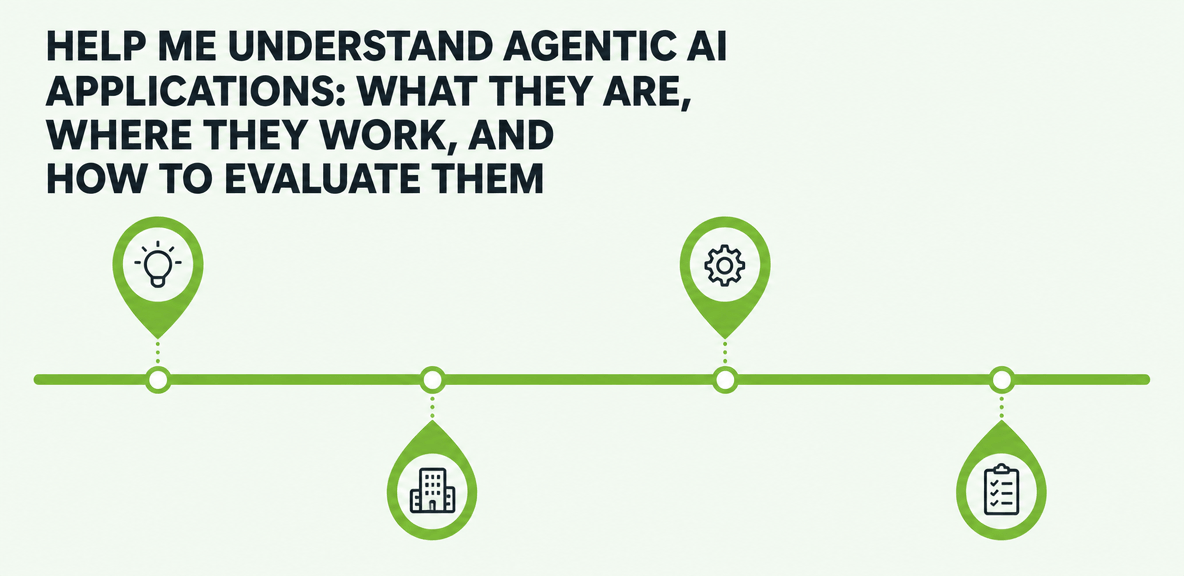
Why agentic AI applications matter now

Enterprise interest in agentic AI applications is rising for a simple reason. Many organizations have already funded copilots and AI tools, but they still cannot prove workflow-level results. License activation is visible. Business impact often is not.
That gap is becoming harder to ignore. According to a 2024 Gartner survey of more than 3,000 managers, only 8% of employees use AI in ways that meaningfully improve their work. At the same time, Gartner research finds 95% of CIOs expect significant AI value from their investments. That is the tension driving the market right now.
Organizations are now asking for more than summaries, drafts, and recommendations. They want AI that can help complete work. They want systems that can interpret context, move through steps, and support execution across enterprise workflows.
If you are asking, “help me understand agentic AI applications,” the practical answer starts here. This article will define the term, show where agentic AI applications fit, and explain what to evaluate before deployment so you can separate real workflow value from category hype.
The board-level question behind the interest
The executive question is not whether AI is interesting. It is whether AI is working.
For CIOs, CFOs, and operations leaders, that question is now tied directly to credibility. AI budgets were approved based on productivity, speed, and business performance. But when the board asks what changed in actual workflows, many leaders still lack evidence they can defend.
That is why agentic AI applications matter. They shift the conversation from what AI can generate to what AI can help complete. In enterprise environments, that is the difference between potential and performance.
Why this is not just another AI buzzword
The term “agentic” can sound abstract if it is not tied to work. But the category points to a real enterprise need.
Traditional AI conversations often stop at assistance. Agentic AI applications go further. They are designed to make decisions within guardrails, take actions across steps, and contribute to measurable outcomes such as faster request completion, fewer abandoned workflows, and reduced manual effort.
The distinction matters because enterprises do not need more AI ideas. They need ways to make AI useful inside real workflows.
What agentic AI applications are and how they differ from other AI tools
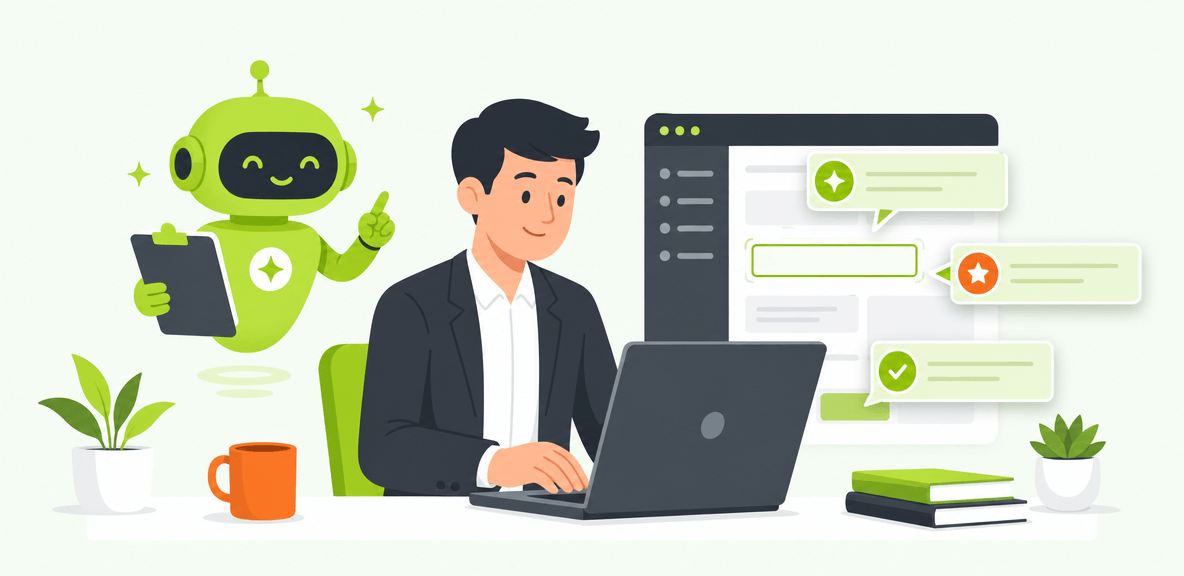
In plain enterprise language, agentic AI applications are systems that can perceive context, reason toward a goal, take action, and adapt within defined limits. They do not just answer a question. They help move work forward.
A useful way to think about them is through a basic operating loop: perceive, reason, plan, act, and learn. The system identifies what is happening, determines the next best action, executes steps, and improves over time based on outcomes or state changes. In practice, though, enterprise value depends less on the loop itself and more on governance, context quality, and execution reliability.
Agentic AI vs generative AI
Generative AI creates content. It drafts emails, summarizes text, answers prompts, and produces recommendations.
Agentic AI applications use intelligence to advance work across steps and systems. They may use generative AI inside the experience, but their purpose is broader. The goal is not only to generate an answer. It is to help complete the task.
Agentic AI vs AI agents vs copilots
These terms are related, but they are not interchangeable.
An AI agent is usually a component that performs a defined function. It may retrieve information, make decisions within rules, or trigger actions.
A copilot is typically an assistant embedded inside a specific product boundary. It helps a user work within that product’s environment.
Agentic AI applications are the business implementation layer. They combine reasoning, tools, workflow logic, and execution paths to solve a use case end to end.
That is why WalkMe positions itself as complementary to copilots. Even if your copilot works exactly as intended inside one ecosystem, enterprise work rarely stays inside one ecosystem. Agentic outcomes depend on context, reach, and execution across the full stack.
What makes an application truly agentic
Not every AI feature qualifies as agentic. A truly agentic application usually includes several characteristics:
- Autonomy within limits so it can act without asking for input at every step
- Goal orientation so it works toward a defined business outcome
- Memory or state awareness so it understands where the workflow stands
- Tool use so it can retrieve data, update systems, or trigger actions
- Exception handling so it can pause, escalate, or route issues when conditions change
- Task completion ability so it does more than recommend the next step
In enterprise settings, that final point matters most. If the system stops at advice, the employee still carries the workflow burden.
The most valuable agentic AI applications in the enterprise
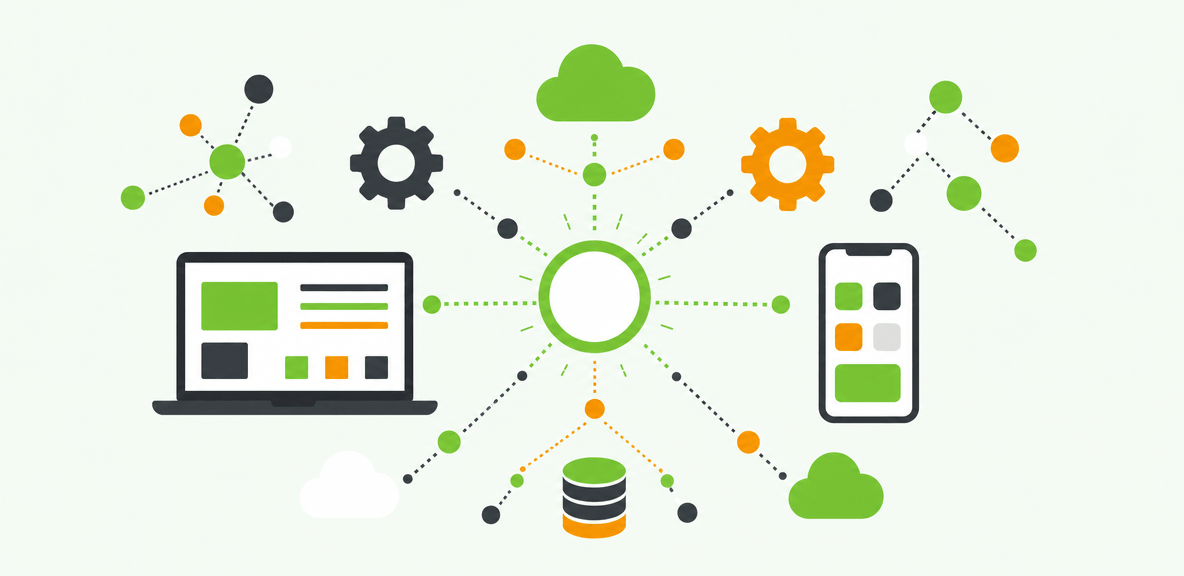
The strongest early use cases for agentic AI applications are usually repetitive, high-volume, rules-heavy workflows with clear success criteria. These are the situations where you can define what “done” looks like, measure performance, and control risk.
The most important reality, however, is that many enterprise applications fail not because the model is weak, but because the workflow crosses multiple systems and the AI lacks screen-level context or execution reach. That is where the category becomes practical rather than theoretical.
IT and service operations
IT and service teams have some of the clearest near-term use cases. Examples include:
- Ticket triage and routing
- Knowledge retrieval for common support scenarios
- Account provisioning support
- Incident response coordination
- Service request completion across ITSM, identity, and collaboration tools
These workflows are structured, frequent, and measurable. They also often cross system boundaries, which makes cross-application unification essential.
HR and employee support
HR teams can apply agentic AI applications to workflows such as:
- New hire onboarding tasks
- Policy guidance
- Benefits workflows
- Manager support
- Employee self-service across HCM, payroll, collaboration, and document systems
These use cases often break down when the employee has to move between platforms and restate context manually. Agentic support is most useful when that burden is removed.
Finance and procurement
Finance and procurement workflows are high-value because precision matters. Common examples include:
- Invoice exception handling
- Purchase request routing
- Supplier onboarding
- Expense validation
- ERP form completion
These are ideal candidates when organizations can combine context awareness with governed workflow execution.
Sales, customer support, and revenue operations
Revenue teams benefit when AI can move beyond summaries and support next-step action. Examples include:
- Case summarization plus follow-up execution
- CRM updates
- Quote support
- Renewal workflow assistance
- Cross-application post-call or post-case tasks
In these workflows, the gap between recommendation and execution often determines whether value appears.
Security and compliance
Security leaders are exploring agentic AI applications for:
- Alert investigation support
- Evidence gathering
- Access review preparation
- Policy-driven escalation workflows with human oversight
These are sensitive environments, so governance and auditability matter as much as capability.
Why many agentic AI applications stall in production
Many initiatives stall for a reason that is easy to miss. The hardest part is not generating an answer. It is finishing the workflow correctly inside the enterprise environment where the work actually happens.
A 2024 Gartner survey identifies the top barriers to AI adoption as lack of training (30%), change resistance (30%), poor AI quality (29%), and no process integration (26%). That final barrier matters especially for agentic AI applications. If AI cannot fit into the workflow, it cannot produce business outcomes.
The context problem: AI is often blind at the moment of work
Many agents cannot see the field state, form, email, or application screen the employee is working in. Without that screen-level context, the system depends on the user to explain what is happening.
That adds friction. It also increases error risk. When employees have to re-enter context manually, abandonment rises and trust falls.
The boundary problem: enterprise work crosses applications
Real work moves across collaboration tools, ITSM platforms, ERP systems, CRM, HCM, and custom applications. Many AI tools do not.
A copilot may work well within its own product boundary, but enterprise workflows cross boundaries constantly. Without cross-application unification, the employee becomes the integration layer.
The execution problem: recommendations are not results
Many agentic AI applications can suggest what should happen next. Fewer can reliably do it.
That gap matters because enterprise systems still contain many workflows with incomplete API coverage. If AI cannot act where work actually happens, especially at the UI level, the process still breaks down before completion.
This is where WalkMe provides proof today. The action bar delivers screen-level context intelligence, carries that context across applications, and supports UI-native execution where APIs do not exist. It helps AI move from assistance to workflow execution in the environment employees already use.
The trust problem: governance must be built in
Production deployment depends on trust. Security teams need to understand privacy controls, auditability, deterministic execution paths, role-based access, and escalation logic.
This is especially important in discussions about autonomous agents. The issue is not whether the capability is real. It is whether the architecture meets enterprise requirements. WalkMe’s approach to governed autonomous execution is grounded in direct UI interaction locally, not screenshot capture and transmission to cloud servers. That distinction matters in regulated environments.
How to evaluate agentic AI applications in a real enterprise environment
A practical evaluation starts with the workflow, not the model. Then you test for context quality, execution reliability, governance, measurement, and employee adoption.
This is also where WalkMe fits as the execution and accountability layer that helps complete copilots and support agentic workflows across enterprise software. The action bar is not another copilot. It is the layer that gives AI the context, cross-application reach, workflow execution support, and adoption analytics needed to perform in the enterprise.
Start with the workflow, not the model
Prioritize use cases with:
- High frequency
- Clear friction
- Defined handoffs
- Visible business impact
- Measurable success criteria
Broad autonomy is not the best starting point. Narrow, high-value workflows usually are.
Evaluate context and cross-application reach
Ask whether the application can understand what the user is seeing and whether context can move across systems without manual restatement.
This is where screen-level context and cross-application unification become decisive. If the workflow spans SAP, Salesforce, ServiceNow, Workday, email, and internal tools, the AI must keep up with the employee across each boundary.
Evaluate execution reliability and control
Assess whether the application can act where work actually happens. That includes:
- UI-level steps
- Exception handling
- Approval paths
- Human-in-the-loop controls
- Governed autonomous execution where appropriate
WalkMe’s Deep UI technology matters here. Thirteen years of learning enterprise interfaces makes it possible to support deterministic workflow execution on the screen, not only through back-end connections.
Evaluate proof: can you measure AI performance
Do not stop at license activation or prompt counts. Measure:
- Adoption rate by workflow
- Task completion rate
- Abandonment points
- Time saved
- Business outcomes tied to the workflow
This is the PROVE layer. If you cannot show where AI is used and whether it completes the task, you still do not have the board-ready answer.
Where the WalkMe action bar fits
The action bar provides proactive assistance across applications. It reads screen-level context in real time, helps build the right AI prompt automatically, supports workflow execution at the UI level, and tracks whether employees are using AI successfully in the flow of work.
It does not replace the AI model. It does not fix a broken process. But it helps complete copilots and agentic workflows where enterprise work actually happens, and it gives you evidence of whether that investment is working.
What to expect next from agentic AI applications
The direction is clear. Enterprises are moving from assistance toward governed autonomous execution. But the path is not abstract. It runs through real workflow control, context accuracy, and accountability.
In enterprise environments, the UI is the ultimate API. Decades of critical workflows still live in interfaces, not complete API layers. Any serious strategy for agentic AI applications has to address that reality.
A realistic maturity path
For most organizations, the maturity path looks like this:
- Guided assistance inside the workflow
- Cross-application execution with context that follows the employee
- Governed autonomous execution for approved, rules-based tasks
Human oversight remains essential, especially in sensitive workflows involving finance, security, compliance, and workforce decisions.
What success looks like one year from now
A year from now, success will not be measured by how many AI features were launched. It will show up in operational terms:
- Higher task completion rates
- Less workflow abandonment
- Better use of existing AI investments
- Clearer ROI evidence for the board
- Stronger confidence from IT and security leaders
Organizations that solve AI adoption and workflow execution will turn AI spend into measurable performance. Others will continue funding tools they cannot prove are working.
If proving AI ROI is the next conversation you are having with your board, the WalkMe action bar is where that proof starts.
People Also Ask
-
What are agentic AI applications in simple terms?Agentic AI applications are AI-powered systems that can understand context, make decisions within guardrails, take action across workflow steps, and help complete tasks instead of only generating answers.
-
How are agentic AI applications different from generative AI and copilots?Generative AI creates content or responses. Copilots usually assist within one product boundary. Agentic AI applications combine reasoning, tools, and workflow execution to move work forward across steps and systems.
-
What are the best enterprise use cases for agentic AI applications?The best early use cases are repetitive, high-volume, rules-heavy workflows with clear outcomes. Common examples include IT ticket handling, onboarding tasks, invoice exceptions, CRM follow-up steps, and security investigation support.
-
Why do agentic AI applications fail after the pilot stage?They often fail because of poor process integration, limited screen-level context, weak cross-application reach, incomplete execution capability, change resistance, and governance concerns. The model may work, but the workflow still breaks.
-
How do you measure ROI for agentic AI applications?Measure adoption rate by workflow, task completion rate, abandonment points, time saved, and business outcomes. Do not rely only on license activation or usage counts. The key question is whether AI helped complete meaningful work.
-
What should security teams evaluate before approving agentic AI applications?Security teams should evaluate privacy controls, audit trails, role-based access, deterministic execution paths, data handling, escalation logic, and whether the system depends on screenshot capture and cloud transmission. For enterprise deployment, governance must be built into the architecture from the start.